
Basement Mold Inspection in Smyrna, GA
Below-grade spaces are where moisture problems in Smyrna, GA homes go to hide. With Cobb County's humid subtropical climate, roughly 50 inches of rain a year, and red Georgia clay that holds water against foundations for days after a storm, basements here live in a permanent moisture challenge. A professional basement mold inspection in Smyrna, GA goes far beyond a quick visual once-over: it is a structured assessment of hydrostatic pressure, drainage, humidity, building materials, and microbial growth across every below-grade surface of the home.
 Independent • Third-Party
Smyrna Mold Inspection serves homeowners across ZIP codes 30080 and 30082. We document conditions with moisture readings, thermal imaging, and laboratory-confirmed mold testing so you know exactly what is happening below your home — and what to do about it. Call (770) 542-0091 to schedule.
Why Smyrna, Georgia Basements Are Prone to Mold
Smyrna sits on rolling terrain east of the Chattahoochee River, and that topography shapes how water behaves around local foundations. Several Smyrna-specific factors make basements here especially vulnerable:
- Red Georgia clay soil. The dense clay common across Cobb County has poor permeability. Water does not drain away from foundations the way it does in sandy soils — it sits against block walls and slabs, exerting hydrostatic pressure that pushes moisture through even tiny cracks and porous concrete.
- Daylight basements on sloped lots. Much of Smyrna's housing stock, particularly around the King Springs area and the older subdivisions north of Windy Hill Road, was built on sloped lots with daylight basements. The buried portions of these walls are below grade on one or more sides, and those buried faces absorb groundwater every time it rains.
- Flash-flood history. The September 2009 flood — when Rottenwood Creek peaked at 11.74 feet through central Smyrna — inundated basements across the city. Recurring tropical downpours and the September 2026 flash floods have repeated that pattern in low-lying pockets. Homes that took on water once often harbor mold growth inside wall cavities from that single event.
- High year-round humidity. With average relative humidity near 70% and no real dry season, basement air that isn't actively dehumidified sits comfortably inside the 60%+ range where Cladosporium, Aspergillus, and Penicillium colonies thrive on organic dust and building materials.
- Aging housing stock. Smyrna's 1940s–1960s brick ranch homes were built before modern damp-proofing and exterior drainage membranes. Many still rely on original foundations, and decades of minor settlement cracking have opened pathways for moisture intrusion.
What Our Basement Mold Inspection in Smyrna, GA Covers
Foundation Walls and Hydrostatic Pressure
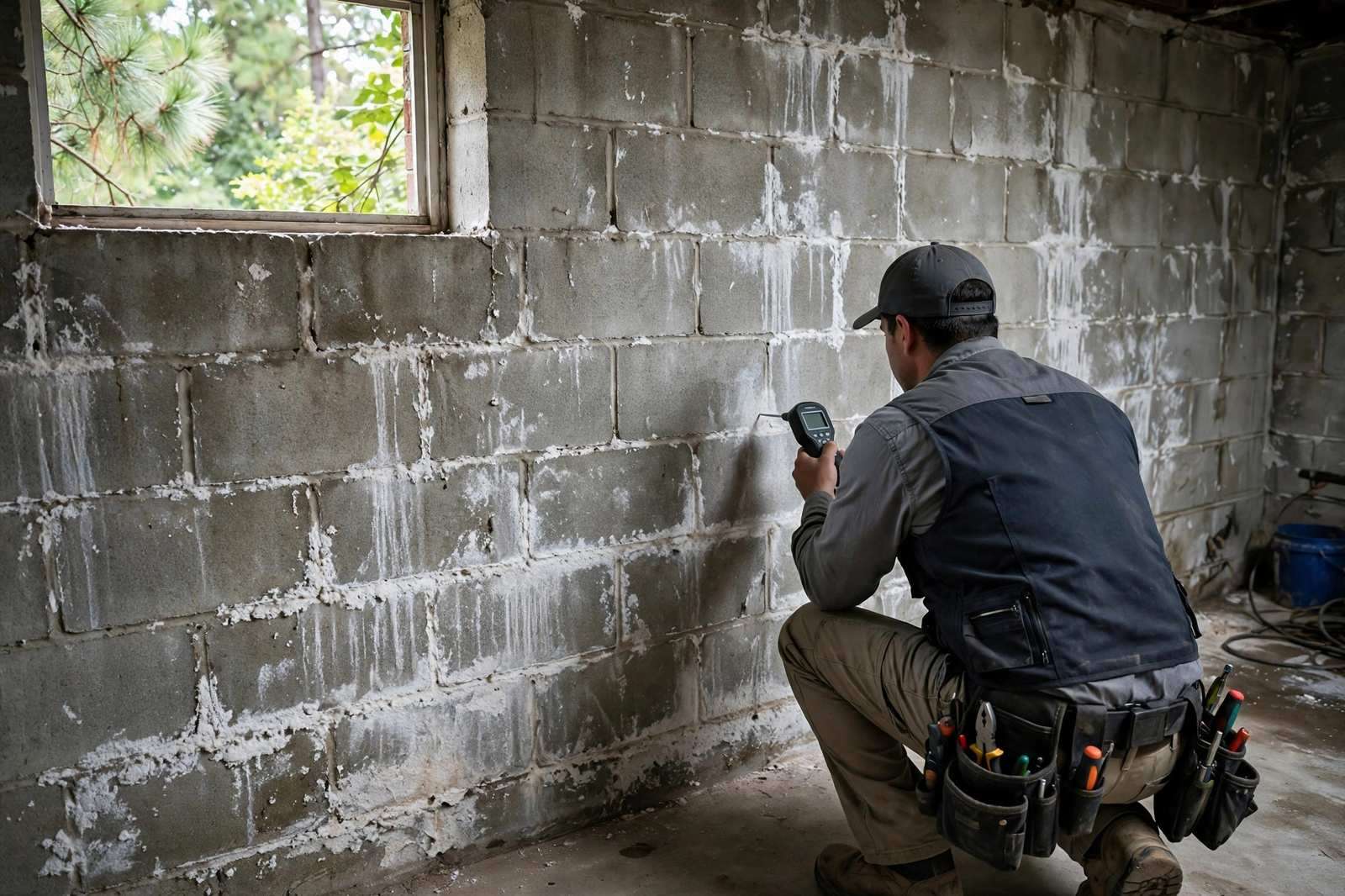
We inspect every accessible foundation wall — poured concrete and block — for active moisture, staining, efflorescence, spalling, and visible colony growth. Hydrostatic pressure through block walls is one of the most common findings in Smyrna basement mold inspections: water wicks through the hollow cores of concrete block and evaporates off the interior face, leaving mineral deposits and feeding mold on dust, paint, and stored materials. Moisture meter readings taken across the wall surface create a moisture map that shows exactly where intrusion is worst.
Efflorescence vs. Mold: Knowing the Difference
One of the most frequent sources of confusion we resolve during basement mold inspections in Smyrna, GA is the white, powdery crust that forms on block walls. That crust is efflorescence — mineral salts left behind as water evaporates through concrete. Efflorescence itself is not mold, but it is a reliable signal that water is actively moving through the wall, and wherever efflorescence appears, conditions favor mold growth nearby. We document both and explain the distinction in plain language, with laboratory surface sampling used whenever a colony's identity is genuinely in doubt.
Finished Basements: Drywall, Carpet, and Baseboards
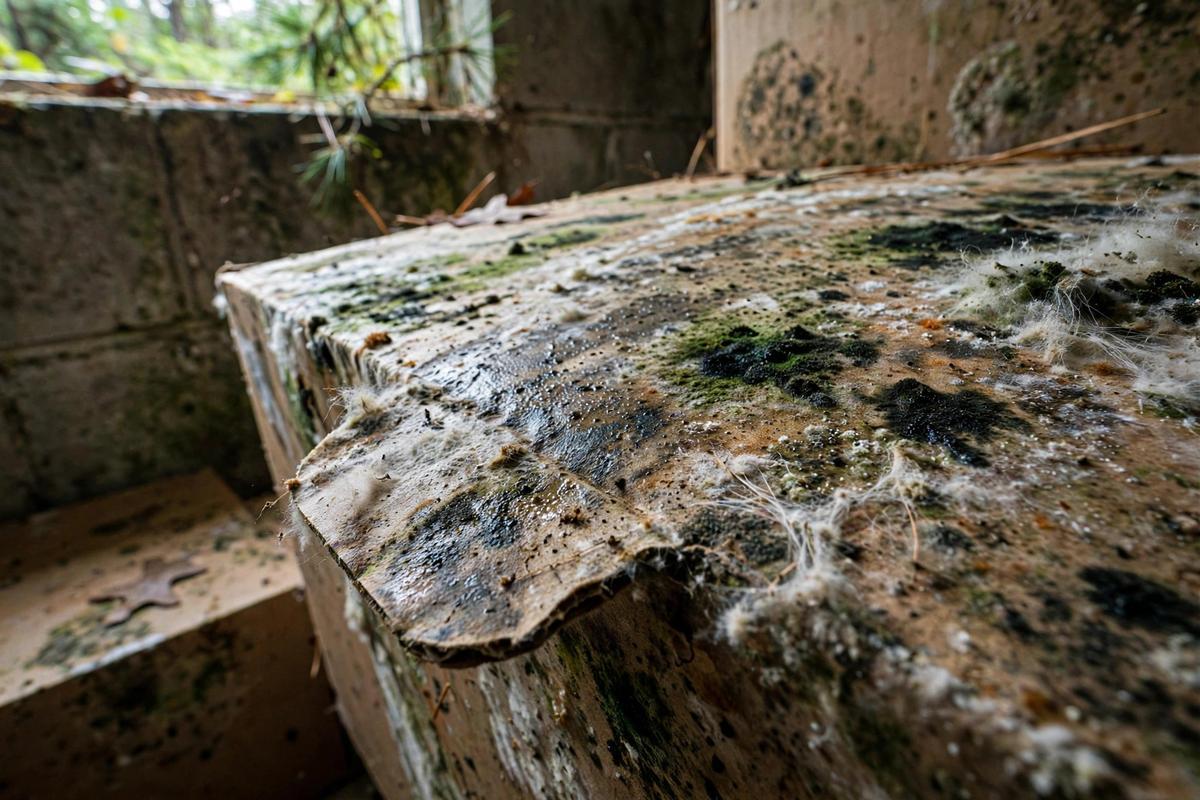
Finished basements are where mold does its most expensive damage. Drywall wicks moisture from slabs and block walls; carpet and pad act as sponges; baseboards trap moisture against the bottom of the wall where it never dries. In many Smyrna ranches, finished basements were added decades after construction without vapor barriers, which means paper-faced drywall sits in direct contact with damp masonry — the single most mold-favorable assembly in residential construction. Our inspectors use pin and pinless moisture meters on drywall, thermal imaging to locate cold/damp zones behind walls, and targeted air sampling where hidden growth is suspected.
Sump Pumps and Flash-Flood Events
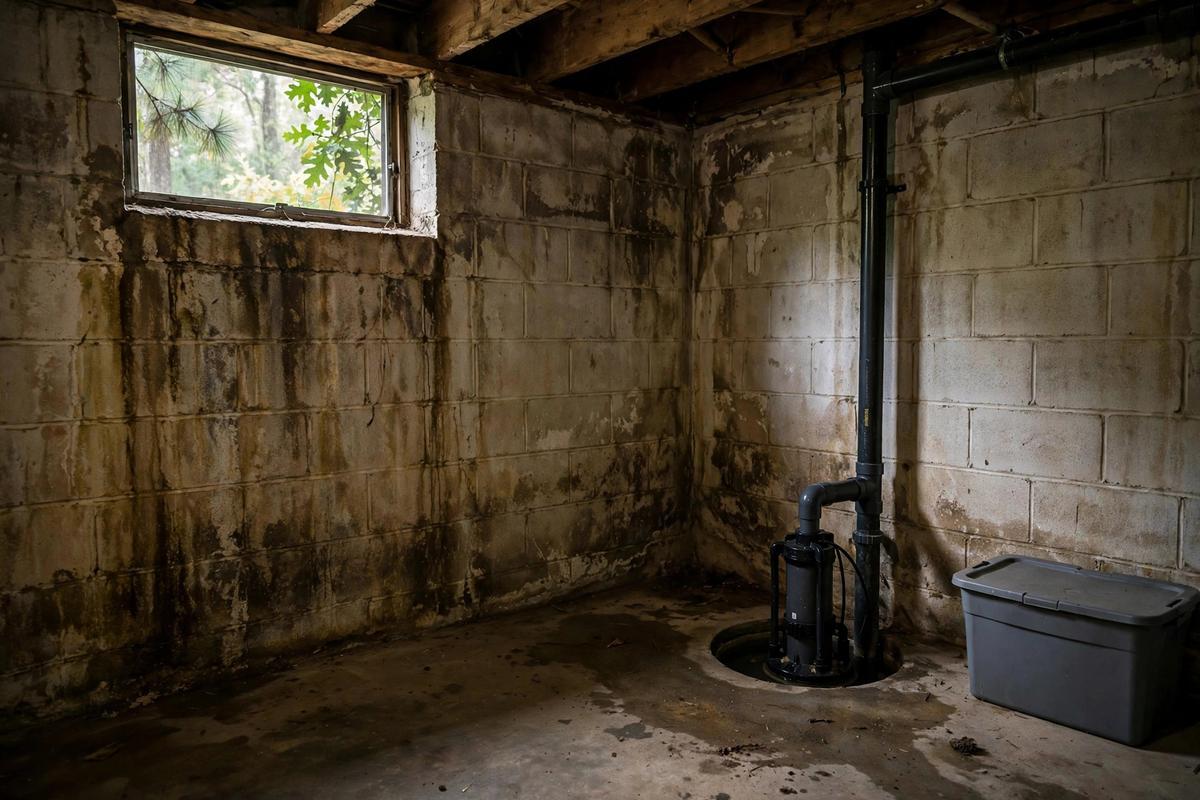
Homes in low-lying Smyrna neighborhoods — near Rottenwood Creek in central Smyrna, or Nickajack Creek to the south — often depend on sump pumps to keep basements dry. Sump pump failures during flash-flood events are a leading cause of catastrophic basement water intrusion: power outages kill the pump exactly when inflow peaks, and a single overwhelmed event can leave several inches of standing water. We inspect sump pits, check valves, discharge lines, and backup systems, and we note the high-water marks and residual moisture patterns that reveal how prior events played out.
Grading, Downspouts, and Foundation Drainage
Most basement moisture problems start outside. We evaluate exterior grading around the foundation (soil should slope away from the house), downspout discharge points (extensions should carry roof water at least 6–10 feet from the foundation, not dump it at the corner), gutter condition, and any visible foundation drainage. In Smyrna's clay soil, short downspouts are a remarkably common root cause: thousands of gallons of roof runoff delivered directly against the foundation saturate the backfill zone, and hydrostatic pressure does the rest.
HVAC and Dehumidification in Below-Grade Spaces
Basement air handlers, ductwork running through crawl spaces, and undersized or absent dehumidification all contribute to basement mold. We check for condensation on supply plenums, musty odors when the system cycles on, and the condition of condensate drains — all of which are documented in the inspection report alongside any paired indoor air quality testing recommendations.
The Crawl Space Connection
Most Smyrna homes don't have full basements — they have vented crawl spaces, which are the #1 mold reservoir in local housing. But homes that have both a basement section and a crawl space section are common in Smyrna's sloped-lot ranches, and the two spaces share air through plumbing chases, duct runs, and floor framing. Mold established in a damp crawl space readily colonizes the adjacent basement, and vice versa. That's why we recommend pairing a basement inspection with our dedicated crawl space mold inspection for split-level and sloped-lot homes: inspecting only one side of the moisture story gives you half a diagnosis.
When to Schedule a Basement Mold Inspection in Smyrna, Georgia
Call (770) 542-0091 if you notice any of the following:
- A musty or earthy odor in the basement that worsens after rain
- White, black, green, or brown discoloration on block walls, drywall, or baseboards
- Efflorescence spreading across foundation walls
- Peeling paint or bubbling on below-grade walls
- Warping, cupping, or damp-feeling carpet and pad
- Condensation on basement windows, pipes, or ductwork
- A history of sump pump failure, standing water, or seepage
- Plans to finish or remodel the basement (inspect before you invest)
- Buying or selling a Smyrna home with a basement
What the Inspection Report Includes
Every basement mold inspection in Smyrna, GA from Smyrna Mold Inspection concludes with a written report that includes: a room-by-room findings summary, moisture meter readings with a moisture map, thermal imaging documentation, photographs of all areas of concern, laboratory results for any air or surface samples collected, species identification for confirmed colonies (Cladosporium, Aspergillus, Penicillium, Stachybotrys, and others), and prioritized recommendations for moisture control and remediation scope. Note: all cost figures we discuss are broad ranges only — this is not a quote, and any remediation contractor you hire should provide a written estimate before work begins.
Mold Testing: Confirming What the Eyes Can't
Visual inspection finds the obvious; mold testing confirms the rest. For basements, we commonly deploy air cassette sampling to compare indoor spore counts against an outdoor baseline, surface tape-lift or swab sampling to identify visible colonies, and cavity sampling when we suspect growth inside finished wall assemblies. Laboratory analysis tells you which species are present and at what concentrations — information that matters for both health-sensitive occupants and remediation planning.
Frequently Asked Questions
Inspection pricing varies with the size of the home, the extent of the basement and crawl space areas, and how many laboratory samples are needed. Most residential inspections with a standard sample package fall in a broad range of roughly $300–$600. This is not a quote — call (770) 542-0091 and we'll scope your home and provide a written estimate before work begins.
Efflorescence itself is mineral salt, not mold, and it isn't a health hazard. But it's a warning sign: it proves water is moving through your foundation wall, and that same moisture feeds mold growth on nearby surfaces. A basement mold inspection in Smyrna, GA will map both the efflorescence and any associated microbial growth.
Yes — intermittent wetting is enough. Mold colonies can establish within 24–48 hours of a wetting event, and repeated cycles of wetting and partial drying actually select for hardy species like Aspergillus and Penicillium. Smyrna's flash-flood events mean even "occasionally damp" basements deserve assessment.
Bleach lightens surface staining on non-porous materials but does not resolve mold on porous block, drywall, or wood — and it does nothing about the moisture source. Worse, it can give a false sense of resolution while growth continues inside wall cavities. An inspection identifies the source so remediation actually works.
Georgia has no state mold license requirement. That makes it especially important to vet inspectors on credentials — look for IICRC certification and a documented inspection protocol that includes moisture mapping and laboratory-confirmed testing, which is the standard we follow at Smyrna Mold Inspection.
Absolutely — it's the highest-value timing for a basement mold inspection in Smyrna, GA. Discovering hydrostatic seepage or hidden colony growth before you invest in drywall, flooring, and trim saves you from tearing out a finished basement later. We regularly inspect pre-renovation basements across 30080 and 30082.
Smyrna Mold Inspection — 2001 Lake Park Dr SE, Smyrna, GA 30080 | (770) 542-0091 | info@moldinspectionsmyrnaga.com
Related Mold Inspection Services in Smyrna, GA
Crawl Space Mold Inspection
Under-home assessment for the mold reservoir beneath Smyrna homes.
Learn more →Indoor Air Quality Testing
Airborne spore counts to document basement-to-living-space migration.
Learn more →