
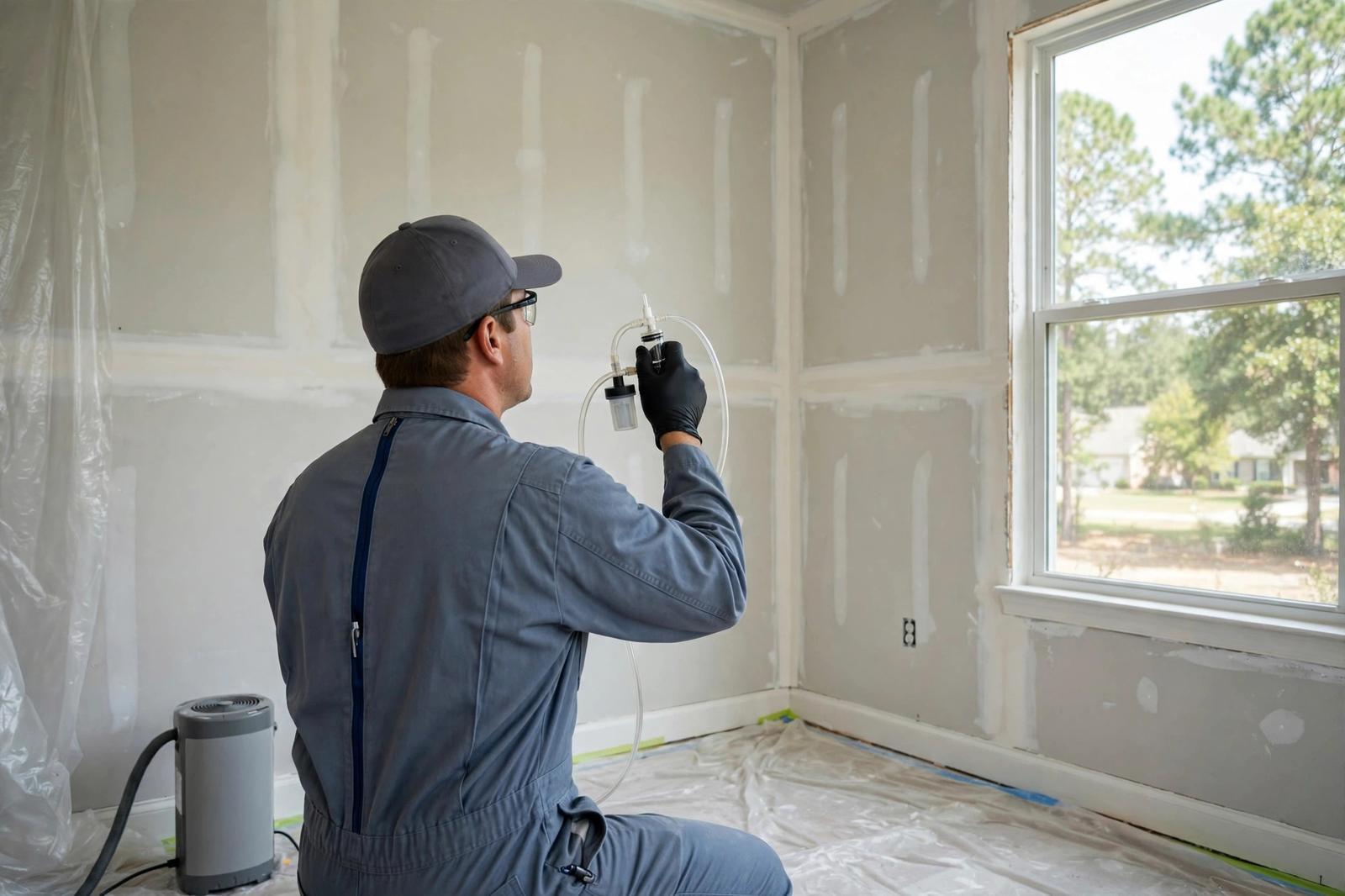
Remediation removes the mold. Clearance testing proves it worked. Mold clearance testing in Smyrna, GA — also called post-remediation verification (PRV) — is an independent assessment performed after mold remediation is complete, confirming through visual inspection, moisture verification, and laboratory air and surface sampling that the affected areas are clean, dry, and back to normal fungal ecology.
This step is what separates a professional remediation job from a promise. Without clearance testing, you're taking the remediator's word that the work succeeded. With it, you hold a documented, lab-backed report — essential for real-estate transactions, insurance files, landlord records, and your own peace of mind. Smyrna Mold Inspection provides independent clearance testing across ZIP codes 30080 and 30082. Call (770) 542-0091 to schedule.
Why Clearance Must Be Done by an Independent Inspector
This is the single most important principle in mold clearance testing, and it's worth stating plainly: the company that performed the remediation should not perform the clearance test. The reasons are structural, not personal:
- Conflict of interest. A remediator grading their own work has a financial incentive to pass it. An independent inspector's only incentive is accuracy.
- Credibility with third parties. Buyers, lenders, insurers, and courts give weight to independent verification. A clearance report from the remediator's own letterhead carries a fraction of the authority.
- Georgia has no state mold license. With no licensing board enforcing separation of roles, the independence standard is upheld by professional practice — IICRC S520 (the industry Standard for Professional Mold Remediation) calls for post-remediation verification, and credible practitioners insist it be independent.
- Failed clearance protects you. If the remediation missed hidden growth — inside a wall cavity, above a ceiling, in a crawl space section that wasn't addressed — an independent inspector finds it before you pay the final invoice or close the transaction. That's the entire point.
Smyrna Mold Inspection performs inspections and testing only. We don't remediate, which means our clearance findings are never influenced by remediation revenue.
The Clearance Protocol: Visual, Moisture, and Air Sampling
A proper mold clearance testing protocol in Smyrna, GA has three legs. All three must pass.
1. Visual Inspection
The inspector examines every remediated area — and the containment and work areas — for residual visible growth, dust and debris, staining that suggests incomplete removal, and the condition of the work area. Remediation should leave the area visibly clean: no remaining colony growth on structural surfaces, no construction debris, no residual dust from the work. We also verify that the moisture source that caused the original growth has been addressed — clearance on a still-leaking assembly is meaningless, because regrowth is a matter of time in Smyrna's ~70% humidity.
2. Moisture Verification
Every remediated material is checked with moisture meters against dry standards for that material. Wood framing should read within normal equilibrium moisture content; drywall, subflooring, and concrete should show no elevated readings. In Smyrna's red-clay environment, where hydrostatic pressure and slab moisture are persistent realities, we pay particular attention to below-grade and ground-contact materials — a "clean" wall that still reads wet will fail clearance, because moisture is the precondition for regrowth.
3. Air and Surface Sampling
Laboratory sampling provides the objective leg of clearance:
- Indoor air cassettes are collected in each remediated area and compared against an outdoor baseline sample taken the same day. The outdoor sample establishes the normal fungal ecology for that day in Smyrna — the background spore types and concentrations floating in Cobb County air.
- Surface samples (tape-lift or swab) are taken on remediated structural surfaces where growth was documented, confirming no residual colonization.
- Aggressive or conditioned sampling methods may be used where appropriate to represent occupied conditions.
Indoor vs. Outdoor Spore Counts: How a Pass Is Determined
Clearance isn't about zero spores — outdoor air in Smyrna always carries Cladosporium, Aspergillus, Penicillium, and other common genera, and indoor air will too. A passing clearance shows that the remediated indoor environment has returned to normal fungal ecology: indoor counts at or below outdoor levels, with a similar mix of spore types and no dominance of the species that drove the original remediation.
What fails clearance:
- Indoor counts significantly elevated above the outdoor baseline, particularly of Aspergillus/Penicillium-type spores, indicating residual indoor amplification.
- Presence of indicator species — Stachybotrys, Chaetomium, or other water-damage markers — indoors at levels suggesting the source wasn't fully addressed.
- A skewed spore profile, where one genus dominates indoors but not outdoors, pointing to an active indoor reservoir the remediation missed.
- Elevated moisture readings in remediated materials, regardless of air results — because wet materials will regrow.
The laboratory analysis, performed by an accredited lab, makes these determinations quantitative rather than impressionistic.
What a Passing Clearance Report Contains
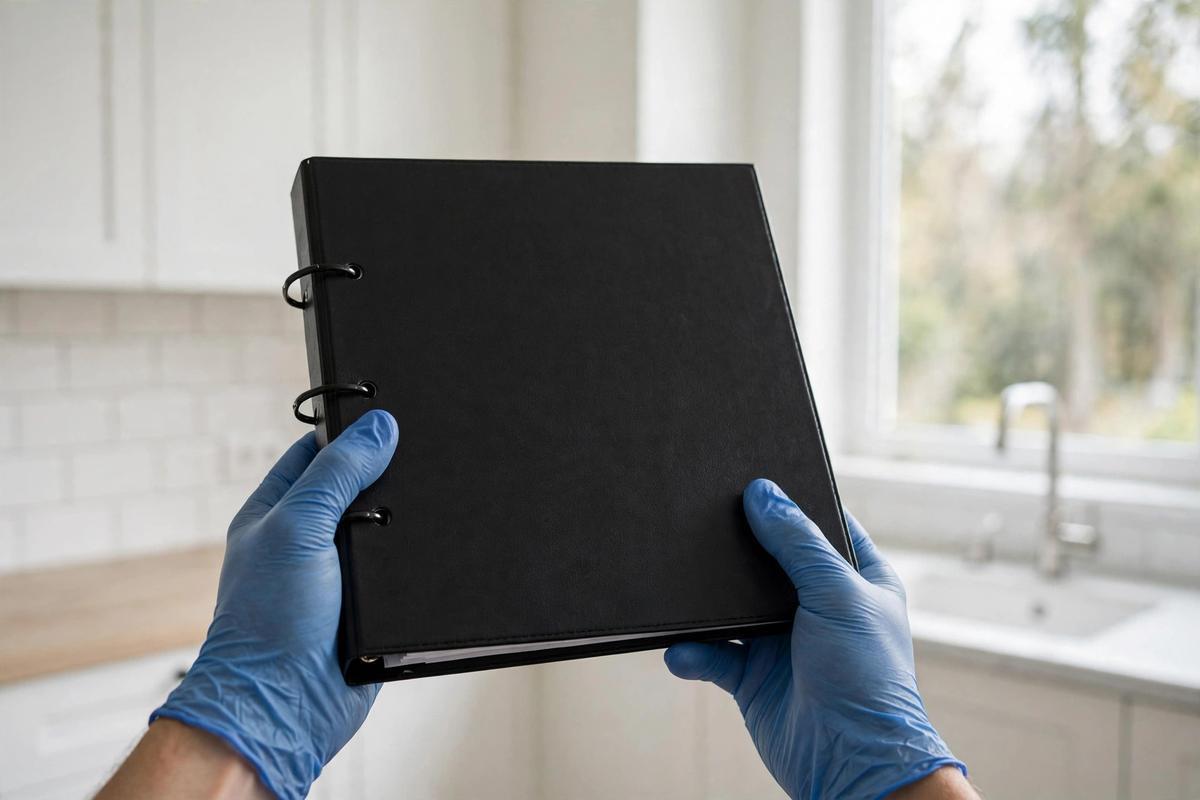
A professional mold clearance testing report from Smyrna Mold Inspection includes:
- Scope statement: which areas were remediated and verified, and the remediation contractor's stated scope for cross-reference
- Visual inspection findings with photographs of each verified area
- Moisture meter readings for all remediated materials, with dry-standard references
- Air sampling results: indoor samples per area plus the outdoor baseline, with spore counts by genus
- Surface sampling results for remediated structural surfaces
- Laboratory chain-of-custody documentation
- Clear pass/fail determination per area, with the criteria applied
- Any limitations (inaccessible areas, HVAC-off conditions, etc.)
This report is a durable document: it goes in your transaction file, your insurance record, or your property maintenance history, and it answers the question "was the mold actually handled?" years later.
Failed Clearance: Next Steps
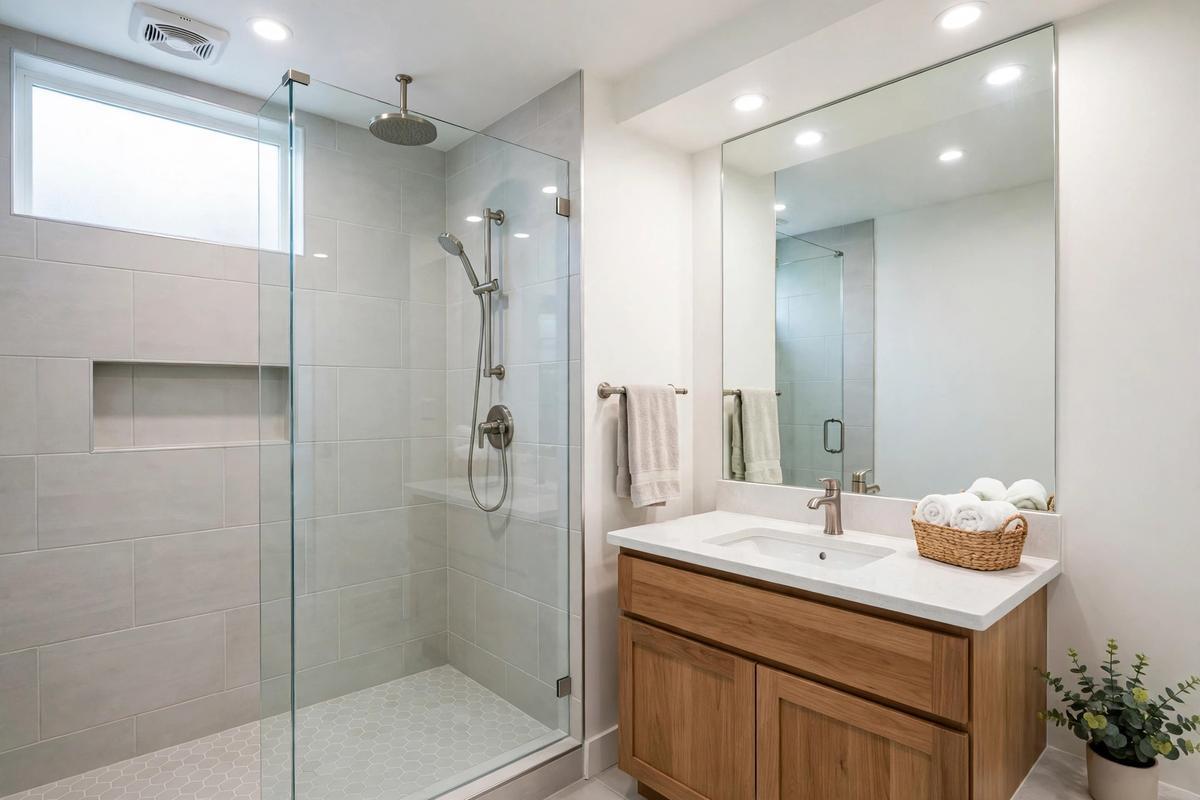
A failed clearance is not a disaster — it's the system working. When an area fails, the report documents exactly why: which rooms, which sample types, which species, which moisture readings. The next steps are straightforward:
- The report goes back to the remediator. The failure findings define the additional scope — the missed cavity, the damp section, the unaddressed moisture source.
- Re-cleaning is targeted, not total. Because the failure is localized by the data, the remediator addresses the specific deficiency rather than re-doing the entire job blind.
- Re-testing verifies the correction. A follow-up clearance round — typically limited to the failed areas — confirms the additional work succeeded. Re-testing is usually a smaller scope (and a lower broad-range cost, roughly in the low hundreds depending on sample count — this is not a quote; a written estimate is provided before work begins).
Critically, final payment to the remediator should be contingent on passing clearance. Structure the remediation contract that way from the start, and the failed-clearance loop is simply quality assurance doing its job.
Clearance Testing for Real-Estate Transactions
In Smyrna's market — with its 1940s–1970s ranch stock, flood history (the 2009 Rottenwood Creek flood at 11.74 feet, recurring tropical events, the September 2026 flash floods), and active infill turnover — mold clearance reports play a defined role in transactions:
- For sellers: A passed clearance report attached to the disclosure package converts a mold history from a liability into a documented resolution. Buyers and their agents treat independent verification very differently from a seller's verbal assurance.
- For buyers: When the seller completes remediation during the contingency period, the buyer's inspector — us — performs the clearance. Never accept the seller's remediator's own clearance as your verification.
- For agents: A clean, independent clearance report keeps transactions moving past the mold objection that kills otherwise healthy deals.
Our scheduling accommodates contingency timelines: call (770) 542-0091 as soon as remediation wraps and we'll coordinate sampling and the 2–3 business day laboratory turnaround (rush options available) against your closing calendar.
Clearance Testing and Insurance Documentation
Where an insurance claim funded the remediation — burst supply lines, water heater failures, storm-driven intrusion — the clearance report completes the claim file. It documents that the covered loss was properly remediated to a verified standard, which matters both for the current claim and for any future claim on the same property. Keep the report with your policy records.
Clearance vs. Initial Testing: Know the Difference
Initial mold testing answers "is there a problem, how bad is it, and what's growing?" Clearance testing answers a different question: "is the problem gone?" The protocols differ — initial testing casts a wide net to characterize the problem, while clearance testing is a focused verification against the remediation scope with strict pass/fail criteria. If you're at the start of the process rather than the end, begin with an inspection and initial testing; clearance comes after remediation is complete.
Please note: All prices on this page are broad ranges only — not a quote. Request a written estimate before work begins; the written estimate is confirmed in writing before any work starts.
Frequently Asked Questions
Clearance pricing depends on the number of remediated areas and the sample count needed to verify them. A typical single-area residential clearance with air and surface samples falls in a broad range of roughly $300–$600; multi-area or whole-house verifications run higher. This is not a quote — call (770) 542-0091 for a written estimate before work begins.
They can offer one, but you shouldn't accept it as your verification. The industry standard — and simple common sense — requires an independent inspector with no financial stake in the remediation outcome. In Georgia, where no state mold license enforces this separation, it's on the property owner to insist on it.
Testing should occur after remediation is complete, containment is removed, the work area is cleaned, and the HVAC system has run long enough to represent normal occupied conditions — typically at least 24 hours of normal HVAC operation. We coordinate timing with your remediator to avoid premature sampling.
The report documents the specific failure — area, sample type, species, moisture readings — and goes back to the remediator for targeted additional work, followed by re-testing of the failed areas. Final payment to the remediator should be held until clearance passes; write that into the remediation contract upfront.
Proportionality applies: a small, contained remediation may warrant a focused verification (visual plus a surface sample or two) rather than a full multi-sample protocol. We'll scope the clearance to the job during scheduling — call (770) 542-0091 and describe the remediation.
Yes. In a market where buyers are alert to flood history and older-home moisture issues, an independent passed clearance report in the disclosure package is one of the strongest documents a seller can provide. It converts "there was mold" into "there was mold, it was professionally remediated, and independent testing verified it."
Smyrna Mold Inspection — 2001 Lake Park Dr SE, Smyrna, GA 30080 | (770) 542-0091 | info@moldinspectionsmyrnaga.com