
Search for help with a mold problem and you will quickly run into two terms used almost interchangeably: mold inspection and mold testing. They sound similar, they are often sold together — but they are fundamentally different services. Understanding the distinction matters, because choosing the wrong one (or paying for both when you need one) wastes money and time.
Here is how mold inspection vs mold testing breaks down for Smyrna, Georgia homeowners.
Mold InspectionWhat Is a Mold Inspection?
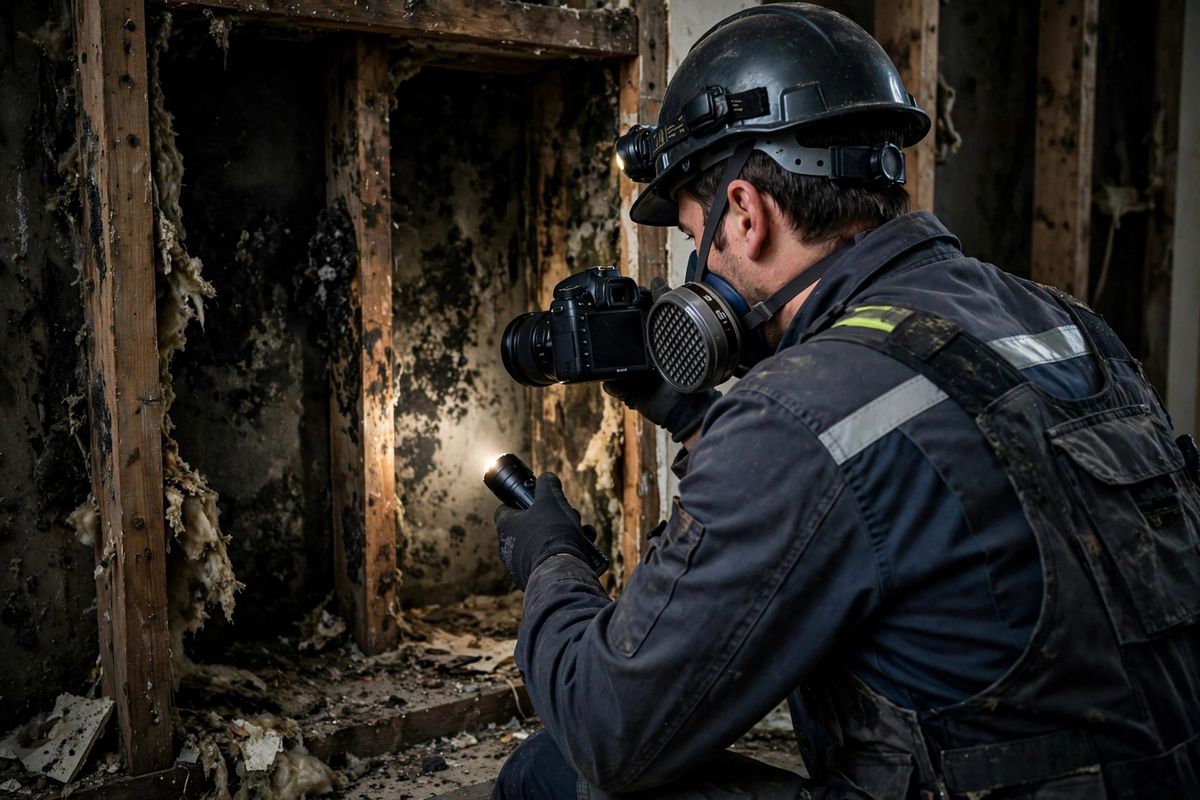
A mold inspection is detective work. A trained inspector visits your Smyrna home and systematically hunts for mold growth and — just as important — the moisture conditions that allow it to thrive. A thorough inspection includes:
- Visual assessment of all accessible areas: living spaces, bathrooms, kitchens, attics, basements, and crawl spaces.
- Moisture mapping with pin-type and pinless moisture meters, identifying damp building materials even where nothing is visible.
- Thermal imaging to reveal hidden moisture behind walls and under floors — cold, damp areas show up clearly on an infrared camera.
- HVAC evaluation, checking ductwork, coils, and drain pans for microbial growth.
- A written report with photographs, moisture readings, findings, and prioritized recommendations.
The inspection answers the questions: Is there mold? Where is it? What is feeding it? What should be done? In Smyrna, inspectors pay special attention to vented crawl spaces over red clay, attics with roof-leak history, and homes carrying moisture legacy from the 2009 flood — the local patterns our housing stock repeats.
What Is Mold Testing?
Mold testing is laboratory science. It involves collecting physical samples and sending them to an independent accredited lab for analysis. Common methods include:
- Air sampling (spore traps). A calibrated pump draws a measured volume of air through a cassette, capturing airborne spores. Comparing indoor samples to an outdoor control sample reveals whether indoor spore levels are elevated — and which species dominate.
- Surface sampling. Tape lifts or swabs of visible growth, identifying the exact species on the surface. Useful for distinguishing, say, common Cladosporium from Stachybotrys.
- Bulk sampling. A piece of the affected material itself (drywall, insulation) sent for analysis.
- ERMI or dust sampling. Advanced testing of settled dust for a DNA-based mold index — occasionally used in medically sensitive situations.
The lab report identifies species and concentrations. Testing answers: Exactly what is growing here, and how much of it is airborne?
Our dedicated mold testing page covers sampling methods and when each applies.
When Do You Need an Inspection, Testing, or Both?
Inspection alone is usually enough when: you can already see or smell the problem and need a professional to map its extent, find the moisture source, and document everything in writing. This is the most common starting point.
Add testing when: someone in the home has allergies, asthma, or unexplained respiratory symptoms; you need documentation for a real estate transaction, insurance claim, or landlord dispute; the inspection finds ambiguous staining that needs species identification; or you want a baseline before remediation and clearance verification afterward.
Testing alone (rarely advisable): A lab result without an inspection is just numbers without context. Elevated spore counts mean little until someone finds where the moisture is coming from. The inspection gives the numbers meaning — which is why reputable professionals in Smyrna recommend inspection first, testing as warranted.
Our ProcessHow They Work Together: A Typical Smyrna Scenario
Consider a common local case: a 1960s ranch in King Springs with a musty finished basement. The inspector's moisture meter finds elevated readings along the daylight-basement wall, and thermal imaging shows a cold plume consistent with exterior water intrusion. Air samples from the basement and an outdoor control go to the lab. Results show elevated Aspergillus/Penicillium-type spores indoors — confirming active growth, not just a smell.
Now the homeowner has documentation: where the moisture enters, what is growing, and how concentrated it is. That package supports a targeted remediation plan — and later, clearance testing by an independent inspector verifies the job worked.

Cost Differences at a Glance
Inspection pricing reflects professional time on site and the written report. Testing adds per-sample lab fees on top — which is why testing-inclusive visits start higher (see our mold inspection cost guide for Smyrna-area ranges). As always, treat published figures as broad ranges, not quotes, and get a written estimate before work begins.

Choosing a Provider in Georgia
Georgia requires no state license for mold assessors — unlike Florida, which licenses them. That makes your vetting matter more. Look for inspectors who follow IICRC standards, use independent accredited labs (never the lab owned by their own remediation company), carry proper insurance, and put everything in writing. Be cautious of any company that offers a suspiciously cheap inspection and then recommends its own expensive remediation: independent assessment first, always.

Frequently Asked Questions
Start with an inspection. It finds the mold and the moisture feeding it. Add testing when you need species identification, documentation for legal or real estate purposes, or answers about air quality for health-sensitive occupants.
Hardware-store settle plates will grow something — mold spores are everywhere, including outdoors. Without controlled air volumes, an outdoor baseline, and professional interpretation, DIY kits produce anxiety more often than answers.
Standard turnaround is typically 2–4 business days; rush analysis is often available for time-sensitive situations like pending real estate closings.
Ideally, no. An inspector who profits from finding problems has a conflict of interest. Use an independent inspection professional for assessment and clearance, and a separate qualified contractor for any remediation.
---
Still unsure which service fits your situation? Call Smyrna Mold Inspection at (770) 542-0091. Describe what you are seeing or smelling, and we will recommend the right level of service — inspection, testing, or both — for your Smyrna home.