
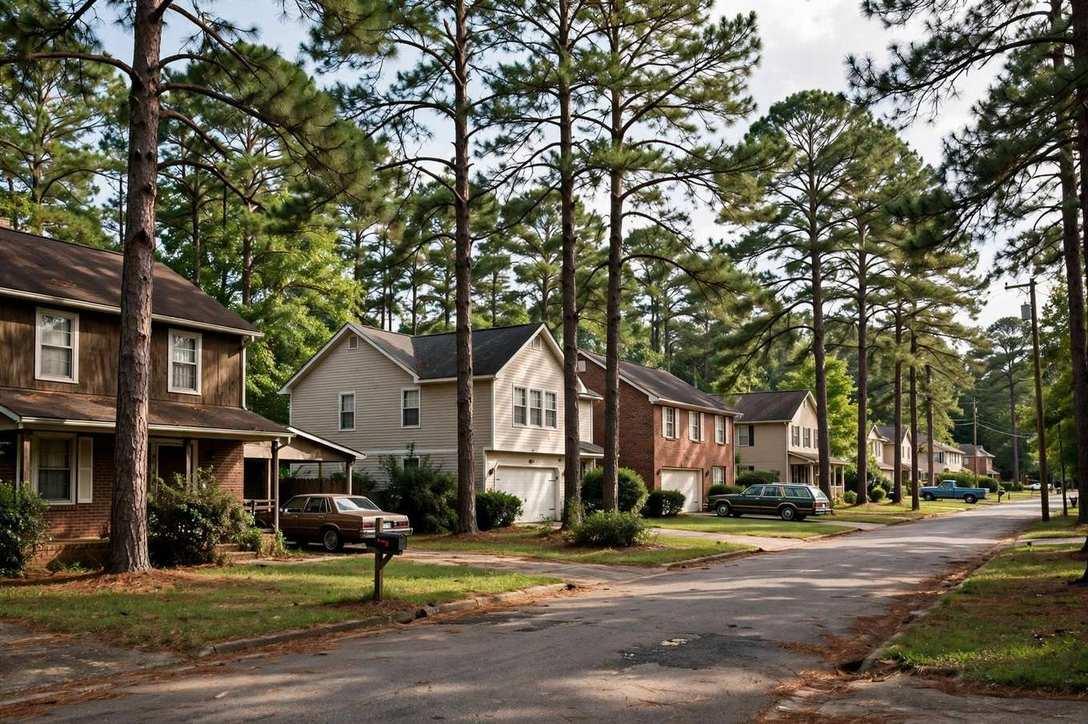
The King Springs area of Smyrna — centered on King Springs Road and its established subdivisions — is defined by two things: solid 1960s brick ranch construction and sloped lots. That slope is the whole mold story here. Builders in the 1960s took advantage of the grade to put finished daylight basements under these ranches, giving families bonus living space at a bargain. Sixty years later, those below-grade walls are fighting a slow, losing battle against hydrostatic pressure — groundwater pushing through concrete block and mortar joints every time Smyrna's red clay saturates.
If you own a King Springs home with a finished basement, you don't have a "maybe" mold situation. You have a when-and-where situation. Our mold inspection in King Springs, Smyrna GA specializes in below-grade moisture: foundation wall assessment, daylight basement evaluation, and the drainage failures that feed them. Call (770) 542-0091.
King Springs Housing Stock: 1960s Brick Ranches on Sloped Lots
Subdivisions like Forest Hills — built out around 1962 — set the template: brick veneer ranches, roughly 1,400 to 2,000 square feet on the main level, with a full or partial daylight basement tucked into the downhill side of the lot. The construction details that matter for mold:
- Concrete block basement walls — porous by nature, dependent on exterior waterproofing (typically just damp-proof tar coating in 1962) and a functioning footing drain. Both have finite lifespans, and both are long expired here.
- Daylight basements, finished as living space — drywall directly against or furred off block walls, carpet over concrete slabs, drop or drywall ceilings hiding the floor structure above. Every finish layer is a mold substrate waiting for moisture.
- Sloped-lot grading — original grading directed water away, but six decades of settling, landscaping changes, and added impervious surfaces have reversed the grade on many lots. Water now runs toward the foundation instead of away from it.
- Red clay backfill — the soil pressed against these basement walls holds water like a reservoir against the concrete, maintaining hydrostatic pressure for days after every storm.
Hydrostatic Pressure: King Springs' Signature Mold Driver
Hydrostatic pressure is simple physics with expensive consequences. When Smyrna's clay soil saturates — during the spring storm season, tropical remnants, or just a wet week — water exerts lateral pressure against basement walls and upward pressure against the slab. It finds every weakness: mortar joints, the cove joint where wall meets footing, cracks from six decades of settling, and penetrations for plumbing and electrical.
The result inside a finished daylight basement:
- Wicking drywall — the bottom 12 to 24 inches of drywall absorbs moisture from the slab and lower wall, growing Aspergillus and Penicillium behind the paint where nobody looks until the baseboard warps.
- Carpet and pad colonization — wall-to-wall carpet over a concrete slab is a mold farm in a basement with moisture intrusion. The pad holds water; the carpet face hides the growth.
- Efflorescence and spalling — white mineral deposits on exposed block signal active water migration; flaking block faces mean it's been happening for years.
- Musty basement odor — the classic sign, caused by microbial volatile organic compounds (MVOCs) from active colonies. If the basement smells, something is growing.
Our basement mold inspection in Smyrna, GA is the core service for King Springs: full below-grade wall assessment with pin moisture meters, infrared scanning for hidden moisture paths, slab moisture testing, and air sampling to determine whether the basement's air is loading the rest of the house with spores through the stack effect.
Drainage: The Fix That Has to Come First
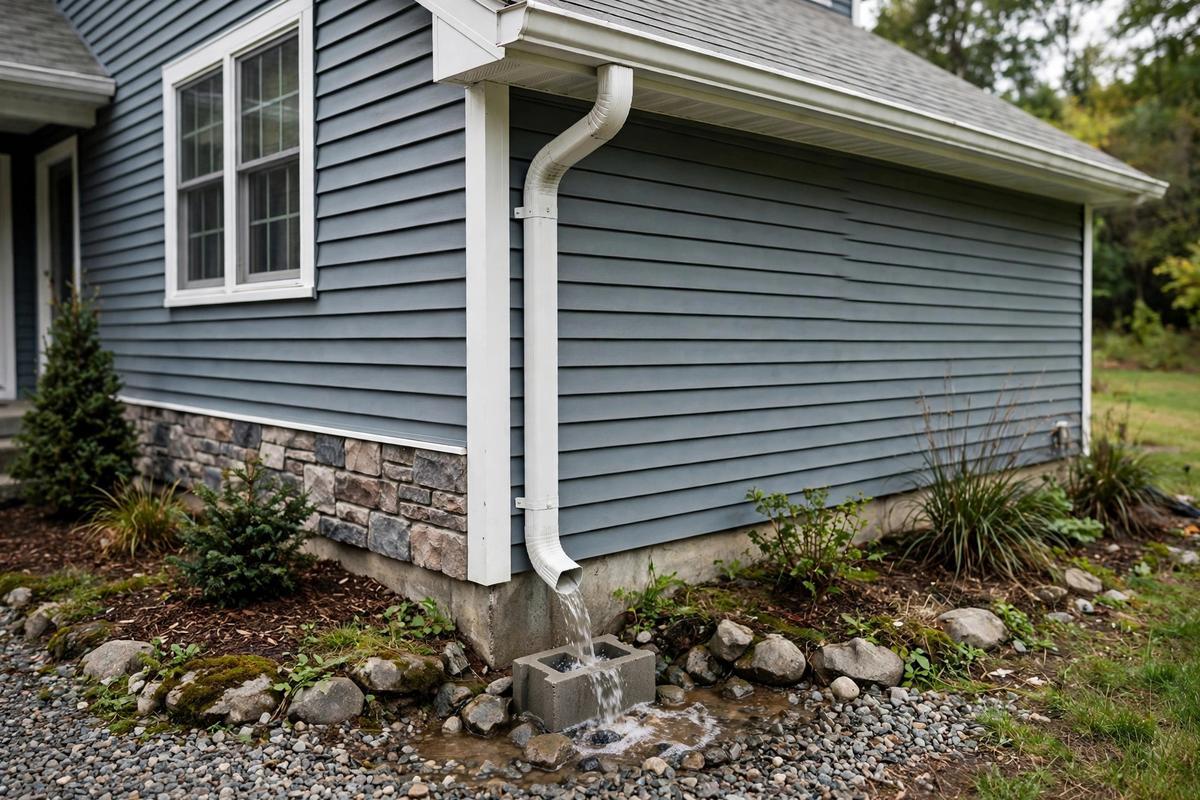
Here's the hard truth about basement mold in King Springs: remediating the mold without fixing the water is temporary. The inspection therefore always includes a drainage assessment — grading direction around the foundation, gutter and downspout discharge points (a shocking number dump right at the foundation), sump pump presence and condition, and signs of footing-drain failure like chronic cove-joint seepage.
We document all of it in the written report with prioritized recommendations, because a remediation contractor needs to know the moisture source before scoping the mold work. If the grading is reversed or the gutters discharge at the foundation, that's a drainage contractor's job first — and we'll tell you that plainly rather than sell you sampling you don't need yet.
The Rest of the 1960s Ranch: Attics, Crawl Spaces, HVAC
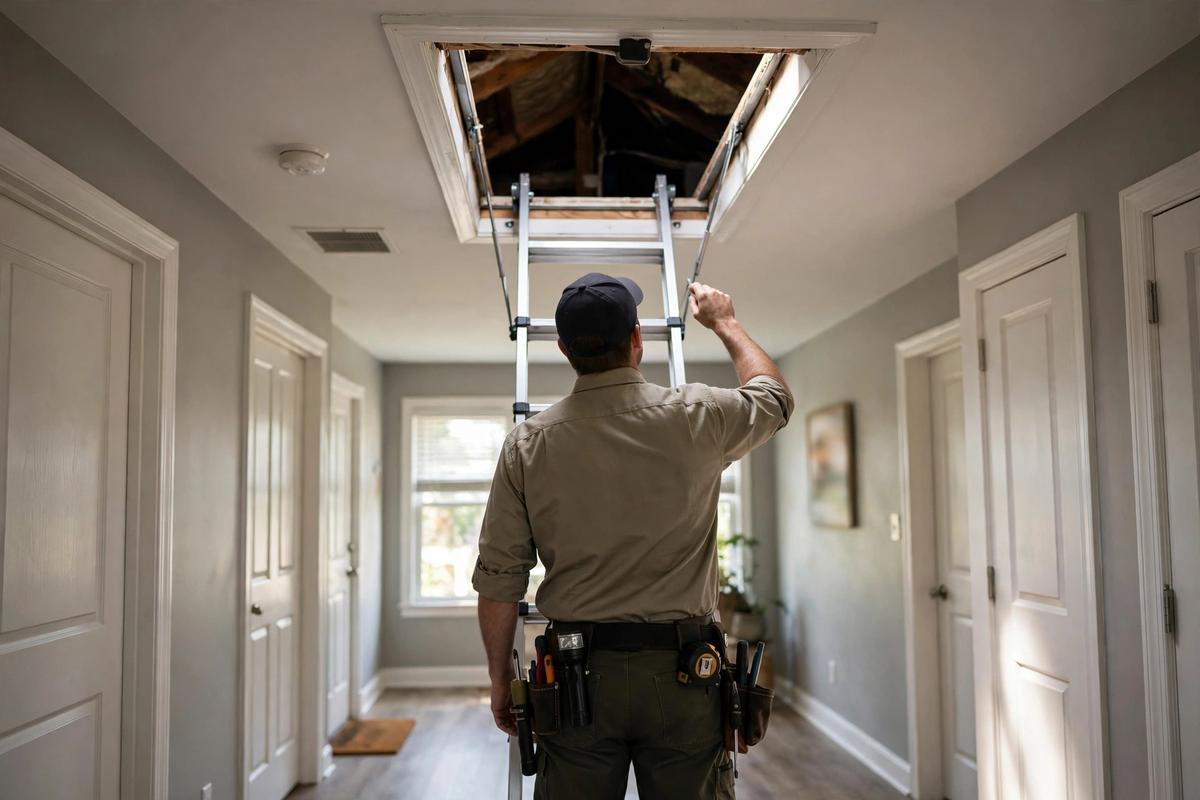
Not every King Springs home is all-basement; many combine a daylight basement under part of the house with a vented crawl space under the rest — the worst of both worlds for moisture. Our inspection covers the full structure:
- Crawl space sections: crawl space mold inspection protocol — full entry, joist moisture mapping, vapor barrier assessment.
- Attics: 1960s roof decking with decades of leak history; infrared and moisture-meter survey. See attic mold inspection.
- HVAC: basement air handlers sitting in humid below-grade air, ductwork running through damp spaces. See hvac mold inspection and indoor air quality testing.
- Air sampling: indoor vs. outdoor baseline comparison, with targeted basement air samples — the only objective measure of whether below-grade mold is affecting the home's air.
Buying a King Springs Ranch? Basement Diligence Is Non-Negotiable
King Springs remains one of Smyrna's best values — brick ranch, basement bonus space, established neighborhood. But finished basements are also where sellers hide the most. Fresh paint on basement walls, new carpet over the slab, air freshener plugged in downstairs: these are staging choices that should trigger diligence, not comfort. A standard Georgia home inspection notes visible conditions and disclaims mold entirely. Our pre-purchase mold inspection puts meters and infrared on those basement walls and tells you what's actually happening behind the finishes — before you're the owner of the problem.
What Our King Springs Inspection Includes
- Full interior visual assessment with infrared thermography
- Complete daylight basement evaluation: wall moisture mapping, slab testing, finish-layer assessment
- Drainage and grading assessment around the foundation
- Crawl space entry where present, with joist moisture mapping
- Attic and roof-deck moisture survey
- HVAC and ductwork evaluation
- Air and surface samples to an independent accredited lab
- Written report: species identification, spore counts vs. outdoor baseline, moisture sources with prioritized drainage recommendations, remediation scope guidance
As broad ranges only — not a quote — most King Springs inspections fall in the $300–$600 range, with lab-analyzed sampling from around $475 and up, and basement-intensive assessments toward the $600–$900 range. A written estimate comes before work begins, confirmed in writing before we start. Details on our mold inspection cost page.
Smyrna Mold Inspection 2001 Lake Park Dr SE, Smyrna, GA 30080 (770) 542-0091 info@moldinspectionsmyrnaga.com
Frequently Asked Questions
Very likely. Musty odor comes from microbial volatile organic compounds — gases released by actively growing mold. In finished daylight basements, the growth is usually behind drywall or under carpet, invisible without investigation. Infrared scanning and air sampling find what eyes can't.
A dehumidifier manages airborne humidity; it doesn't stop water pushing through walls or wicking up from the slab, and it doesn't remediate existing colonies. It's a reasonable supplement after the moisture source is fixed and mold is remediated — not a substitute for either.
Infrared thermography reveals temperature differentials from hidden moisture; pin moisture meters test through small, inconspicuous probe points; and air sampling detects the spore signature of concealed colonies. We also inspect every accessible unfinished area — utility rooms, storage areas, behind access panels — which usually tells the story of the finished sections.
Fresh basement paint before a sale deserves professional skepticism — paint is the cheapest way to cover staining from water intrusion. It doesn't mean the seller is hiding something, but it does mean a pre-purchase mold inspection with moisture meters and infrared is the only way to know what's underneath.
Yes. Every King Springs inspection includes a drainage assessment — grading direction, downspout discharge, sump condition — because basement mold without a moisture-source diagnosis is an incomplete inspection.
Yes, through the stack effect: warm air rising through the house pulls basement air upward through every penetration — plumbing chases, wiring holes, stairwells. Our air sampling includes both levels to measure exactly how much of the basement's spore load is reaching the living space. If allergies or musty odors upstairs trace to the basement, the samples will show it. Call (770) 542-0091 to schedule.