
Mold Inspection in Cumberland, Smyrna GA
Mold inspection in Cumberland, Smyrna GA for apartments, condos & rentals — tenant documentation, HOAs & property managers. IICRC-standard. Call (770) 542-0091.
 Independent • Third-Party
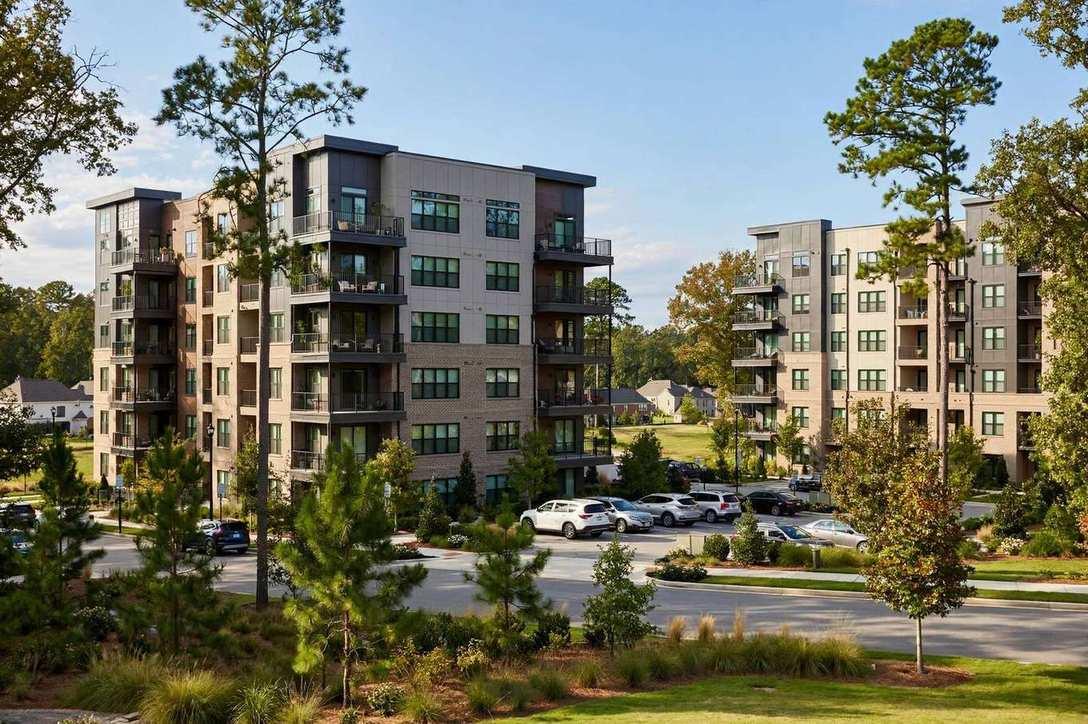
Cumberland doesn't look like the rest of Smyrna — and its mold problems don't behave like the rest of Smyrna's either. This is the city's multifamily corridor: 1980s condo communities like Cumberland Hills (1981) and Cortland (1982), sprawling garden-style apartment complexes, and a wave of new luxury mid-rises, all clustered along Cumberland Boulevard and Spring Road in the shadow of Truist Park and The Battery. The housing stock here isn't single-family ranches with crawl spaces. It's stacked units, shared walls, HOA-maintained exteriors, and building-wide HVAC systems — which means mold here is a multi-unit, multi-party problem.
Our mold inspection in Cumberland, Smyrna GA serves the people this market actually consists of: renters documenting conditions, condo owners fighting HOA battles over water intrusion, and property managers protecting portfolios. Call (770) 542-0091.
Cumberland's Housing Stock: Condos, Apartments, and Shared Everything
The Cumberland area's residential buildings fall into three generations, each with its own mold profile:
- Early-1980s condo conversions and purpose-built condos (Cumberland Hills, Cortland, and their contemporaries) — now 40-plus years old, with original-era plumbing stacks, aging flat and low-slope roof sections, and exterior envelopes maintained (or not) by HOAs with varying reserves. Stacked plumbing means a leak in Unit 3B becomes mold in Unit 2B's ceiling.
- Garden-style apartment complexes — wood-frame construction, vented crawl spaces or slab-on-grade, decades of tenant turnover with minimal between-tenant moisture investigation. Bathrooms with original exhaust fans (or none), kitchens with decades of cooking humidity, and maintenance teams incentivized to paint over problems.
- New luxury mid-rises — tight envelopes, complex rooflines, amenity spaces with pools and fitness humidity loads. New-construction moisture trapping applies here just as it does on Church Street's infill — framing rained on before dry-in, sealed inside airtight walls.
The common thread: shared building systems. Your mold problem is rarely just yours — it involves neighbors, HOAs, or management companies. Our inspections document conditions with the rigor these multi-party situations demand.
Renters: Documenting Mold Conditions in Cumberland Apartments
A large share of our Cumberland calls come from tenants. The pattern is familiar: a musty bedroom, visible growth in the bathroom, allergy symptoms that clear up on vacation — reported to management, answered with a can of paint or a shrug. Here's what renters need to know:
- Document professionally. A landlord responds differently to an independent inspection report with lab results than to a tenant's complaint. Our inspection gives you species identification, spore counts, and moisture-source analysis in writing.
- Know Georgia law. Georgia has no specific mold statute for rentals, but landlords still owe habitable premises and must address water intrusion and plumbing failures that cause mold. Our Georgia mold rental guide walks through how this works before you call.
- Don't remediate it yourself. Bleach on drywall mold is cosmetic; the colony behind the paint continues. Worse, disturbing mold without containment spreads spores through the unit.
We inspect individual rental units for tenants throughout the Cumberland area. If management needs convincing, a written report from an IICRC-standard inspection with independent lab analysis is the most convincing document you can put on their desk.
Condo Owners and HOAs: The Water Intrusion Battle
In Cumberland's 1980s condo communities, the defining mold disputes are about the building envelope — roofs, exterior walls, windows, and common-area plumbing — which the HOA maintains, versus interior damage, which the unit owner owns. When a 40-year-old flat roof section leaks into the top-floor units, or when failed window flashing on the windward elevation wets wall cavities across six units, the question of who's responsible gets expensive fast.
Our inspections serve both sides of this divide: unit owners documenting that interior mold traces to a common-element water intrusion source, and HOAs or property managers getting an objective, building-wide assessment before committing to remediation scope. The written report — moisture sources mapped, species identified, spore counts against outdoor baseline — gives boards and owners a shared factual basis instead of competing opinions.

Property Managers: Portfolio Protection in a High-Turnover Market
Cumberland's rental turnover is among the highest in the Smyrna market, and every turnover is a mold liability checkpoint. Property managers use our inspections for:
- Move-in/move-out documentation — establishing unit condition with professional rigor
- Tenant complaint response — independent investigation that protects both the tenant's health and the owner's liability position
- Building-wide assessments — aging garden-style complexes with systemic issues (failing roofs, original plumbing stacks) need portfolio-level moisture mapping, not unit-by-unit whack-a-mole
Our commercial mold inspection service covers multifamily portfolios, with reporting formatted for management records and owner communication.
The Truist Park / The Battery Adjacency Effect
The Cumberland area's proximity to Truist Park and The Battery (just across the interstate, with Atlanta addresses but Smyrna-adjacent daily life) has driven a wave of redevelopment and densification — new mid-rises, renovated complexes, rising rents. For mold inspection purposes, the effect is twofold: new construction brings construction-moisture risk, and the redevelopment pressure means older complexes are being cosmetically refreshed for higher rents without addressing 40-year-old building systems. A "newly renovated" 1982 garden-style unit usually has new finishes over original plumbing, original windows, and an original roof. Our pre-purchase mold inspection for condo buyers — and our tenant documentation inspections for renters — look past the renovation at the systems underneath.

Indoor Air Quality in Multifamily Buildings
Shared HVAC is the defining air quality factor in Cumberland's multifamily stock. Central systems, aging ductwork, and units that share return-air pathways mean one unit's mold problem becomes several units' air quality problem. Our indoor air quality testing and hvac mold inspection evaluate the system as a distribution network, with sampling designed for multi-unit contexts.
What Our Cumberland Inspection Includes
- Full unit visual assessment with infrared thermography
- Moisture mapping of walls, ceilings, and wet areas
- Building-envelope and common-element water intrusion assessment (condos)
- HVAC and shared-system evaluation
- Air and surface samples to an independent accredited lab
- Written report: species identification, spore counts vs. outdoor baseline, moisture sources, remediation scope guidance — formatted for tenants, owners, HOAs, managers, or transaction documentation as needed
As broad ranges only — not a quote — most Cumberland unit inspections fall in the $300–$600 range, with lab-analyzed sampling from around $475 and up; building-wide and portfolio assessments are scoped per property with a written estimate before work begins. See mold inspection cost for residential ranges.
2001 Lake Park Dr SE, Smyrna, GA 30080
(770) 542-0091
info@moldinspectionsmyrnaga.com
Frequently Asked Questions
Start with documentation: our inspection produces a written report with lab results identifying species, spore counts, and the moisture source — the professional evidence base for any next step. Review our Georgia mold rental guide for how mold issues work under Georgia landlord-tenant law, and keep all communication with management in writing.
It depends on the moisture source. If interior mold traces to a common-element failure (roof, exterior envelope, common plumbing), the HOA typically bears responsibility for the source and often the resulting damage — but HOAs dispute this routinely. An inspection documenting the moisture path from common element to your unit is the evidence that settles the argument.
Both. Individual units for tenants and owners; building-wide and portfolio assessments for property managers and owners under our commercial mold inspection service.
Because renovation usually means new finishes over old systems — original 1980s plumbing, original windows, original roof, and whatever moisture history the unit accumulated. Cosmetics don't remediate mold; they conceal it. An inspection with infrared and moisture meters sees through the renovation.
Yes — through shared wall cavities, stacked plumbing chases, and shared or adjacent HVAC pathways. If your building has a known moisture problem in another unit, mention it when scheduling; we'll extend sampling to the shared assemblies.
Unit inspections typically within 24–48 hours. If you're documenting conditions for a landlord dispute or working against a lease or purchase deadline, say so when you call (770) 542-0091 — time-sensitive inspections get priority scheduling.
Concerned About Mold in Your Smyrna Home?
Call Smyrna Mold Inspection today for an independent, professional assessment — with written findings you can act on.
(770) 542-0091 Request an Inspection