Black Mold Inspection in Smyrna, GA: What Stachybotrys Demands
Few phrases unsettle a homeowner like "black mold." In Smyrna, GA — where humid subtropical air, ~50 inches of annual rainfall, and flash-flood-prone creeks like Rottenwood and Nickajack keep moisture pressing against homes year-round — Stachybotrys chartarum finds the prolonged saturation it needs more often than most residents realize. A black mold inspection in Smyrna, GA is a specialized assessment: it goes beyond "is there mold" to answer which mold, how extensive, what fed it, and what it will take to be certain it's gone.
 Independent • Third-Party
Smyrna Mold Inspection provides professional black mold assessments across Smyrna and Cobb County, backed by accredited third-party laboratory analysis and IICRC-certified inspection methodology. If you've found dark, slimy-looking growth or you're smelling persistent mustiness after a water event, call (770) 542-0091. This is not a situation for guesswork or bleach-and-paint.
What "Black Mold" Actually Is
"Black mold" is a colloquial term, not a scientific one — and that confusion causes real problems. Several common mold genera appear dark or black to the naked eye:
- Cladosporium — extremely common, often dark green-black, grows on windowsills and bathroom surfaces throughout Smyrna homes. Usually a maintenance issue, not an emergency.
- Alternaria — dark, velvety growth common on damp window frames and in showers.
- Aspergillus niger — black, powdery, common on damp grout, produce, and building materials.
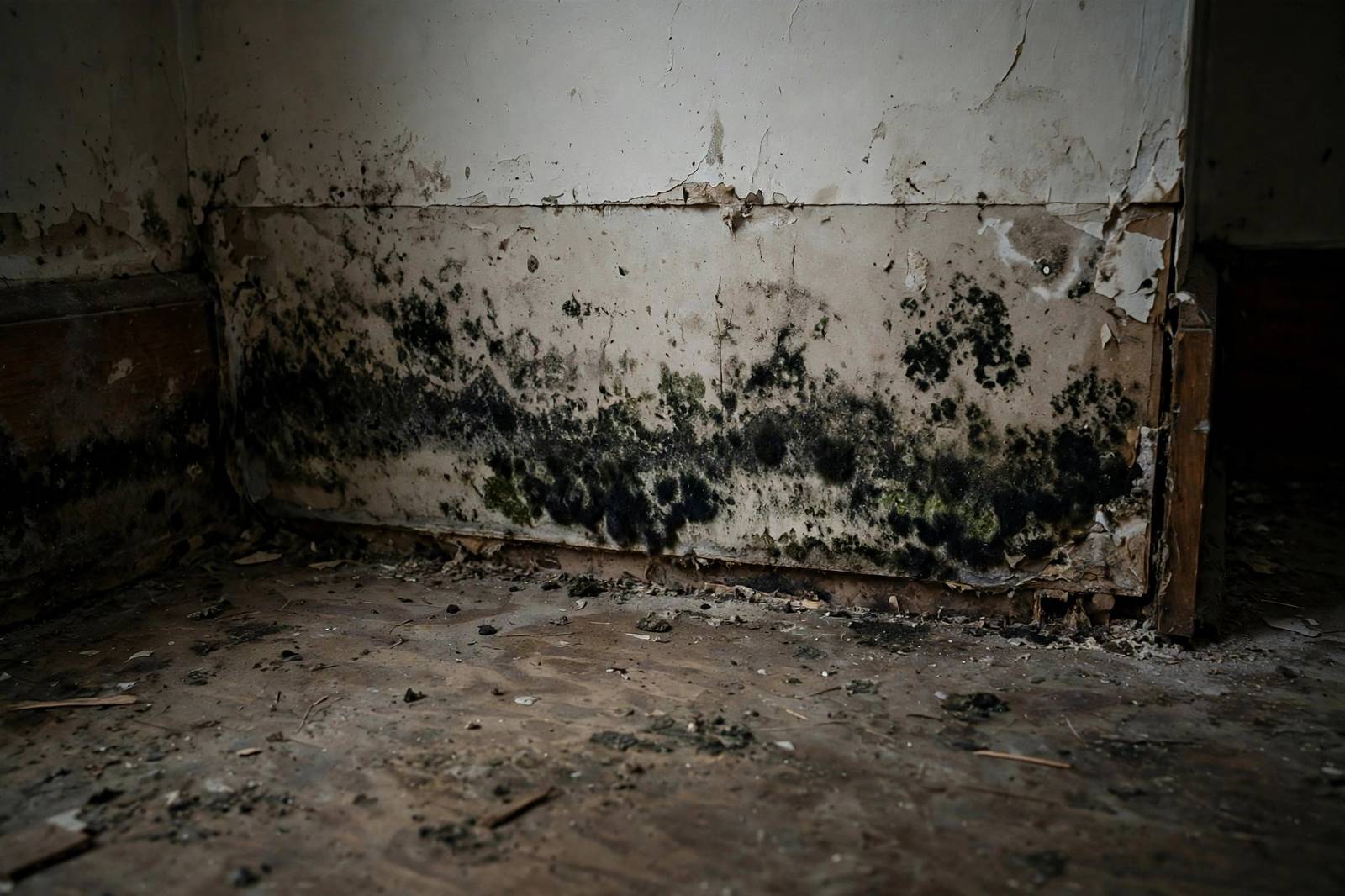
- Stachybotrys chartarum — the species behind most genuine "black mold" concern. Dark greenish-black, slimy when wet, and — critically — it requires prolonged, chronic saturation of cellulose-rich materials to establish itself.
Visual identification alone cannot distinguish Stachybotrys from its look-alikes. That single fact is why professional assessment matters: treating a Cladosporium patch like a Stachybotrys colonization wastes money, while treating Stachybotrys like a cleaning issue risks spreading contamination and missing the moisture source that will simply regrow it. Only laboratory analysis of a tape lift, swab, or bulk sample — performed by an accredited third-party lab — confirms which genus you're dealing with. Learn more about how that analysis works on our mold testing page.
Why Stachybotrys Thrives in Smyrna, Georgia Homes
Stachybotrys needs two things: constant moisture and cellulose. Smyrna supplies both generously.
Chronic moisture sources in Smyrna homes include the slow roof leaks common on the city's 1940s–60s brick ranch stock, where aging shingles and flashing failures around chimneys let water wick into attic decking and down wall cavities for months before anyone notices a ceiling stain. In south Smyrna near Nickajack Creek and central neighborhoods along Rottenwood Creek — which peaked at 11.74 feet in the September 2009 flood and surged again in the September 2026 flash floods — hydrostatic pressure and seepage keep lower wall cavities damp long after floodwater recedes.
Cellulose-rich materials are everywhere in residential construction: paper-faced drywall, paper-backed fiberglass insulation, ceiling tiles, cardboard backing, and wood products. When these stay wet — not damp for a weekend, but saturated for weeks — Stachybotrys colonizes. Its spores are heavy and sticky, so unlike Cladosporium it doesn't readily become airborne; it sits in place, growing, until disturbed. That also means air samples alone can miss it — surface and bulk sampling of the affected material is essential, which is why our inspection protocol always pairs visual/moisture assessment with targeted mold testing.
The vented crawl space factor. Smyrna's red Georgia clay holds moisture against foundations, and vented crawl spaces pull humid ~70% outdoor air across cool ductwork and floor joists. Condensation keeps subfloor materials chronically damp — textbook Stachybotrys habitat, hidden from every room in the house.
Health-Concern Framing: What We Can and Cannot Say
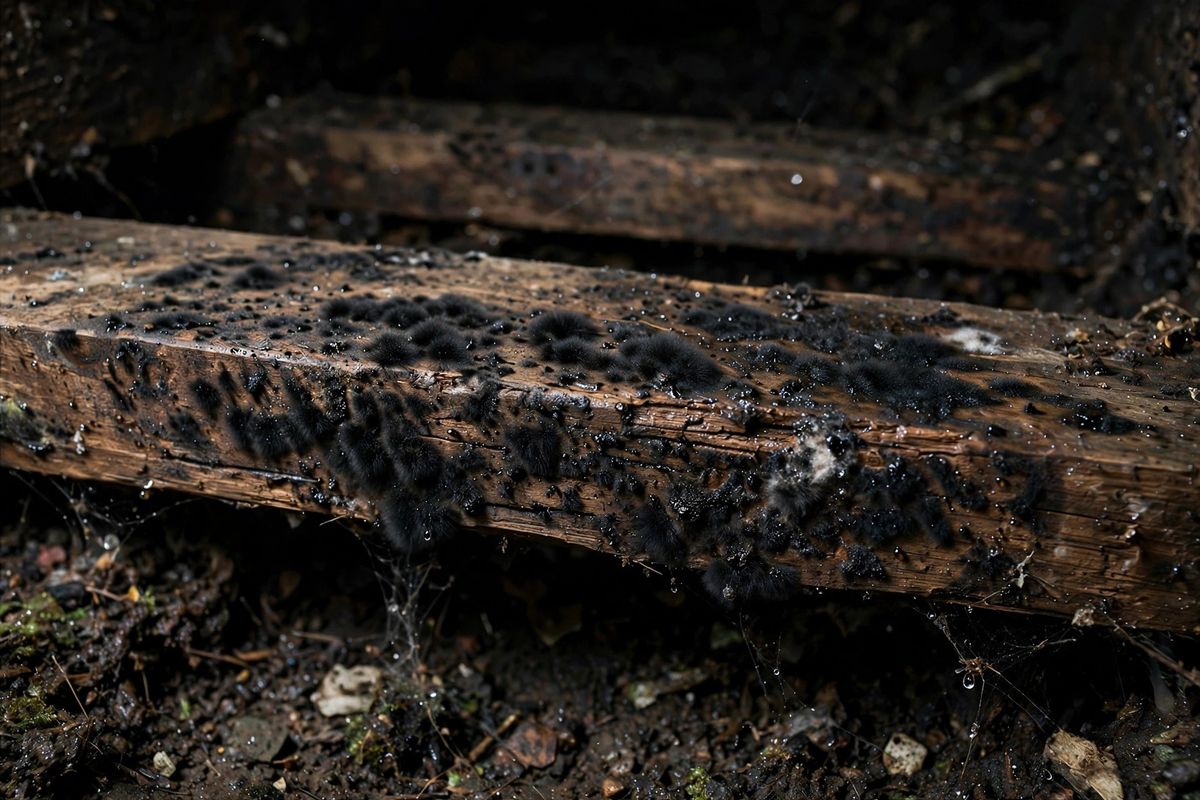
Let's be direct. Stachybotrys chartarum produces mycotoxins — compounds that laboratory research has studied for their potential health effects. Some occupants of buildings with Stachybotrys contamination report respiratory irritation, persistent allergy-like symptoms, headaches, or fatigue. These reports are real, and they are why black mold findings deserve professional seriousness.
But an inspector is not a physician, and a lab report is not a diagnosis. We make no medical claims about what any mold exposure has caused or will cause in your household. What we provide is environmental documentation: what genus is present, how extensive the colonization is, and what moisture conditions sustain it. If anyone in your home is experiencing symptoms you believe may be related to mold exposure, consult a medical professional — and bring them our lab report, because objective environmental data helps clinicians evaluate your situation far better than a verbal description of "some black stuff."
Be deeply skeptical of any Smyrna mold company that diagnoses health effects, prescribes medical responses, or uses frightening medical language to sell remediation. That is outside every legitimate inspector's scope — and Georgia's lack of a state mold license means unqualified operators face few barriers to making such claims. Vet on IICRC certification and independent lab use, not on who sounds the most alarming.
Our Black Mold Inspection Process in Smyrna, GA
1. History and Symptom Interview
Every assessment starts with your story: when the growth or odor appeared, any known water events (roof leaks, plumbing failures, the 2026 floods, appliance overflows), and whether symptoms or odors correlate with time spent in specific rooms. Your history directs the investigation.
2. Systematic Visual Inspection
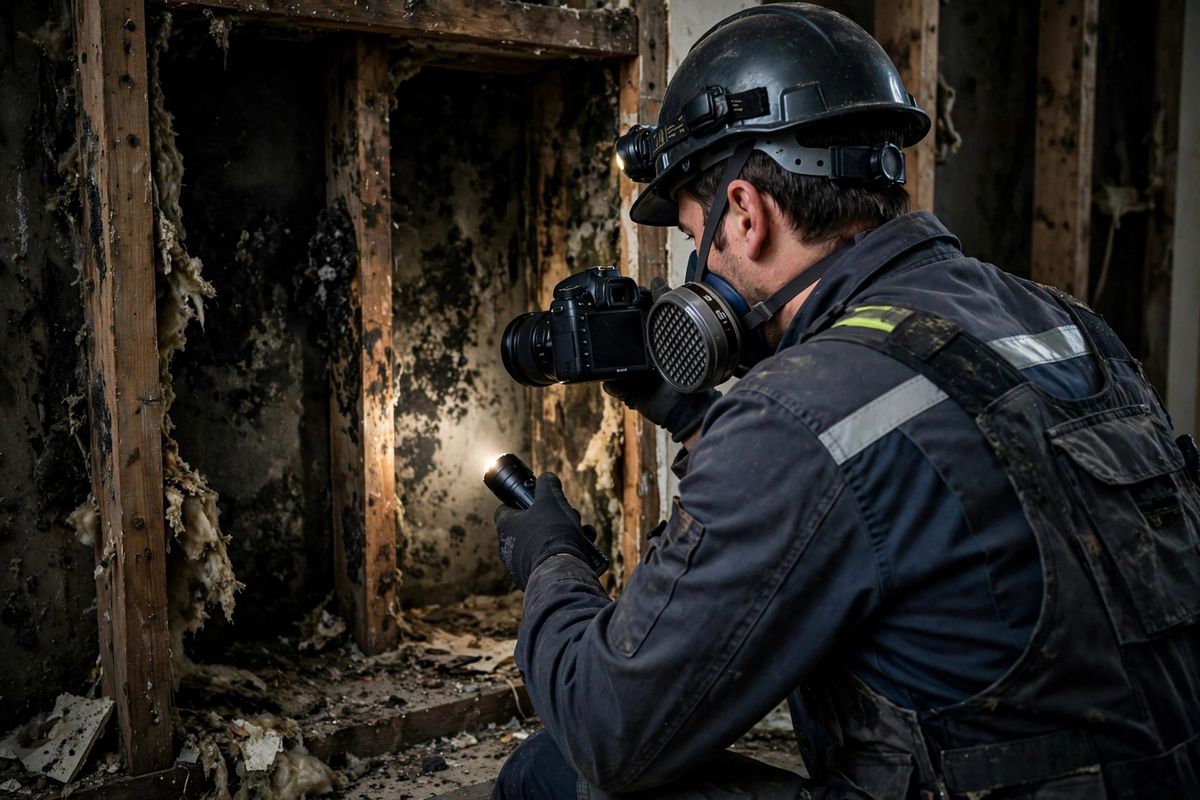
We inspect the complaint areas and the moisture pathways connected to them — because Stachybotrys at a baseboard may originate from a plumbing leak two rooms away or a roof failure two stories up. Attics, crawl spaces, basements on sloped lots, HVAC closets, and exterior grading and drainage all get examined. We document growth characteristics: color, texture, spread pattern, and the condition of the underlying material.
3. Moisture Mapping
Pin and pinless moisture meters map exactly how far the wetness extends beyond what's visible. Stachybotrys colonies routinely extend well past the visible stain — moisture mapping defines the true boundary, which is what any remediation scope must be built on. We also check wood moisture content in framing and subfloor, since elevated readings reveal chronic conditions even where surfaces look dry.
4. Targeted Sampling
Tape lifts, swabs, or bulk samples of the suspect growth go to an accredited third-party laboratory for genus-level identification. Where hidden growth is suspected (odor without visible colony), air sampling with spore trap cassettes and an outdoor control may be added. Full sampling methodology is detailed on our mold testing page.
5. Source Identification
The inspection report identifies not just the mold but the moisture source feeding it — the failed flashing, the unsealed crawl space vents, the negative grading toward the foundation, the bathroom fan venting into the attic. Remediation without source correction is a temporary cosmetic fix; our report makes sure you know what actually has to change.
6. Written Report
You receive a documented findings report: inspection observations, moisture readings, lab results with interpretation, source analysis, and recommended next steps. This is the document you hand to a remediation contractor for scoping, to your insurer for a claim, or to a buyer or seller in a transaction.
What Happens After Black Mold Is Confirmed
Confirmation is the midpoint, not the endpoint. The typical path:
- Fix the moisture source first — roof repair, plumbing fix, drainage correction, crawl space encapsulation. No remediation scope should be priced before the source is identified and correctable.
- Professional remediation — Stachybotrys-affected porous materials (drywall, insulation) generally require removal, not cleaning, under containment with negative air pressure. We are an inspection firm and do not perform remediation, which keeps our assessment independent.
- Clearance testing — post-remediation verification sampling confirms the work succeeded before reconstruction begins. Never pay a final remediation invoice without it.
Black Mold Inspection Cost in Smyrna, GA
A professional black mold inspection with targeted lab sampling in the Smyrna area typically falls in the $300–$600 range for a standard residential assessment, depending on the number of samples and areas investigated. This is not a quote. Every situation differs — a single suspect bathroom wall versus a whole-house odor investigation are different scopes. Smyrna Mold Inspection provides a written estimate before work begins, itemizing the inspection, each sample, and lab fees.
Why Smyrna Trusts Our Black Mold Assessments
- IICRC-certified inspectors — Georgia requires no state mold license, so certification is how you separate professionals from opportunists. We hold ours.
- Accredited third-party labs only — the lab confirming your Stachybotrys has no connection to us and nothing to sell you.
- No remediation conflict — we inspect and test; we don't remediate. Our findings never come bundled with a sales quote for the fix.
- Smyrna-specific expertise — we know where this city's water comes from: Rottenwood and Nickajack floodplains, red clay foundations, aging ranch roofs, vented crawl spaces. We look in the right places first.
- Plain-language reporting — lab science translated into decisions you can act on.
If you've found suspicious dark growth or you're living with a musty odor you can't source, don't guess and don't delay — Stachybotrys only expands while its moisture source persists. Call (770) 542-0091 for a professional black mold inspection in Smyrna, GA, or reach us at info@moldinspectionsmyrnaga.com. Visit us at 2001 Lake Park Dr SE, Smyrna, GA 30080.
Black Mold Inspection FAQs — Smyrna, GA
No. Many common molds — Cladosporium, Alternaria, Aspergillus niger — appear black or dark and are routine household findings in humid Smyrna homes. Only laboratory analysis can confirm whether growth is Stachybotrys chartarum. Never let color alone drive decisions (or panic).
Bleach may lighten surface discoloration, but it doesn't reliably kill mold rooted in porous materials like drywall, and it does nothing about the moisture source. Worse, aggressive DIY cleaning of a Stachybotrys colony can aerosolize spores and spread contamination. If growth covers more than a small surface area or keeps returning, get a professional assessment first.
Stachybotrys is a slow colonizer compared to Cladosporium or Penicillium — it typically needs one to two weeks of continuous saturation on cellulose materials to establish. That's why the slow, unnoticed leaks (roof flashing, crawl space condensation, seepage after the 2026 floods) are its typical Smyrna habitat, not the quickly-dried spill.
A general home inspector may note staining, odors, or moisture — but genus identification requires lab sampling, which is outside a standard home inspection. If you're buying in Smyrna and the inspection flags moisture or suspicious growth, a dedicated mold inspection with mold testing before closing is the prudent next step.
Coverage varies widely by policy and cause — sudden plumbing failures are treated very differently from long-term seepage or flood damage (which typically requires separate flood insurance). Our documented inspection report and lab results give your adjuster the objective evidence a claim needs, but review your specific policy language with your agent.
That's a personal decision, and if health concerns are driving it, consult a medical professional. Environmentally, our role is to document the extent and location of growth so you can make informed choices — including whether to limit use of affected areas until remediation is complete.
Related Mold Inspection Services in Smyrna, GA
Mold Testing
Air and surface sampling with accredited lab analysis to confirm mold species.
Learn more →Crawl Space Mold Inspection
Full under-home moisture and mold assessment for Smyrna's vented crawl spaces.
Learn more →