
Mold Testing in Smyrna, GA: Air & Surface Sampling Explained
When a visual inspection isn't enough, mold testing in Smyrna, GA provides the laboratory-backed evidence homeowners, buyers, and property managers need to make confident decisions. Smyrna's humid subtropical climate — roughly 70% average humidity, no true dry season, and around 50 inches of rain per year — means mold growth in Cobb County homes is not a question of if moisture finds a way in, but when. From Rottenwood Creek's flash flooding in central Smyrna to the condensation-prone vented crawl spaces under the city's 1940s–60s brick ranch homes, moisture is a year-round reality here. Mold testing turns suspicion into data: spore counts, genera identification, and an indoor-versus-outdoor comparison that tells you whether what you're breathing is normal for Smyrna — or a hidden problem that needs professional attention.
 Independent • Third-Party
Smyrna Mold Inspection performs independent mold testing throughout Smyrna and Cobb County. Our samples go to accredited third-party laboratories — never our own lab — because independence is what makes a test result trustworthy. If you're smelling mustiness, seeing suspicious staining, or buying a home in ZIP codes 30080 or 30082, call (770) 542-0091 to schedule testing.
When Mold Testing in Smyrna, GA Is Warranted
Not every mold situation needs laboratory analysis. A small patch of visible growth on a bathroom window frame in a Smyrna apartment is a cleaning issue, not a testing issue. Mold testing earns its value in specific scenarios:
- Hidden growth suspicion. Musty odors with no visible source, especially after the September 2026 flash floods or earlier tropical events that pushed Nickajack Creek and Rottenwood Creek out of their banks. Odors without a visible colony often mean growth inside wall cavities, behind built-in cabinetry, or under flooring.
- Real estate transactions. Buyers of Smyrna's older brick ranch homes and new infill alike increasingly request testing as part of due diligence — particularly after a general home inspection flags staining, past water intrusion, or elevated moisture readings.
- Health-related concerns. When household members experience persistent allergy-like symptoms at home that ease when they leave the house, indoor air testing compares your indoor spore profile to Smyrna's outdoor baseline. (We make no medical claims — if you have health concerns, consult a medical professional.)
- Post-remediation verification. After a remediation project is complete, clearance testing confirms the work actually succeeded before you pay the final invoice or rebuild.
- Insurance and dispute documentation. Claims adjusters, landlords, and tenants all accept accredited lab reports as objective evidence in a way that verbal opinions are not.
- Baseline before renovation. Disturbing drywall or flooring in a moisture-prone Smyrna home can aerosolize hidden mold. Pre-renovation testing documents what was there first.
What Mold Testing Actually Involves in Smyrna, Georgia
A professional testing appointment follows a structured process — not random swabs of whatever looks dirty.
Step 1: The Site Assessment
Before any cassette is opened, the inspector documents the property: moisture history, prior flooding (many Smyrna homes near Rottenwood Creek carry a 2009 or 2026 event in their past), HVAC configuration, crawl space or basement conditions, and the specific complaint driving the testing. This context determines where and how to sample. Testing without strategy produces data without meaning.
Step 2: Air Sampling (Spore Trap Cassettes)
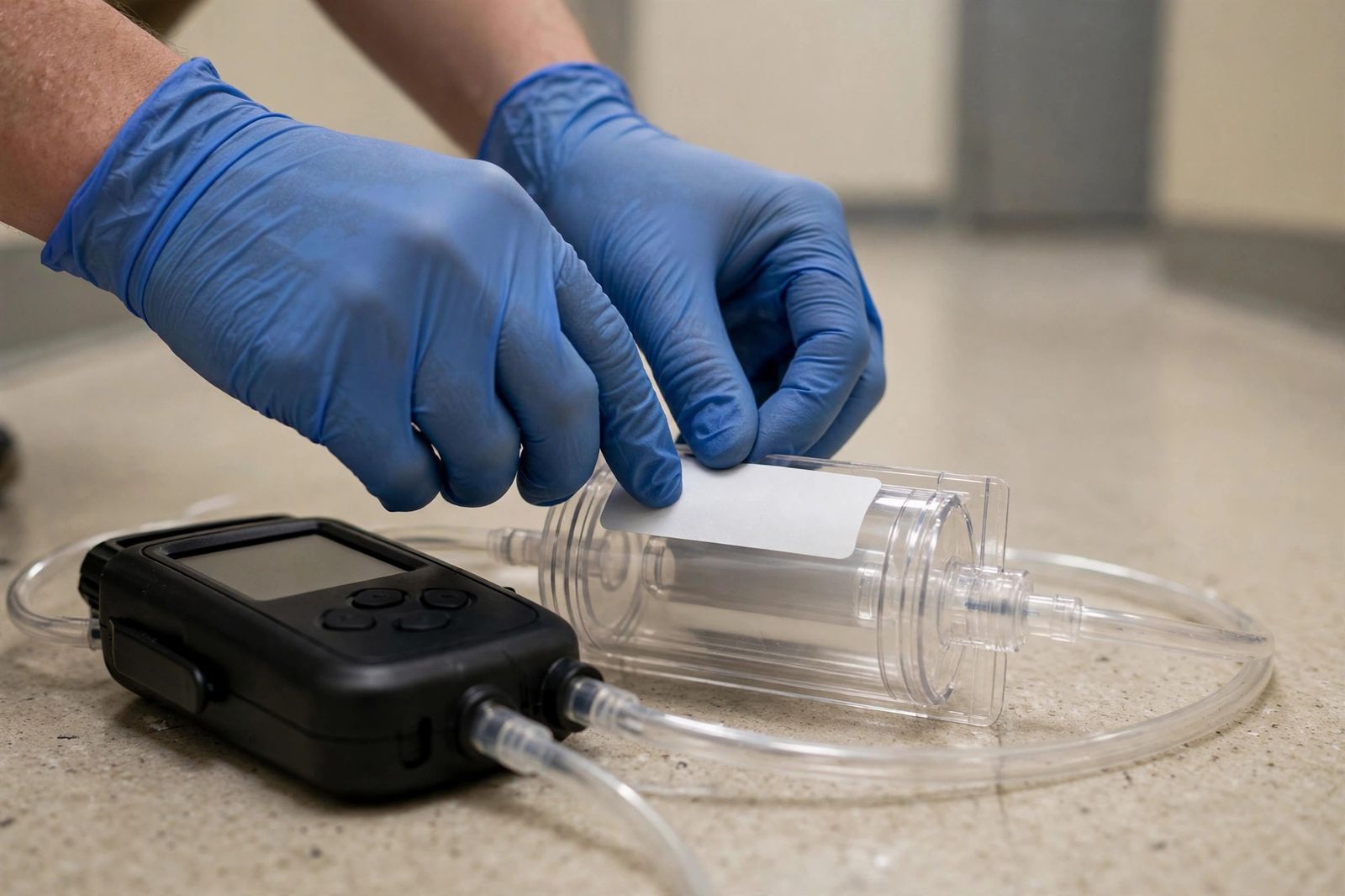
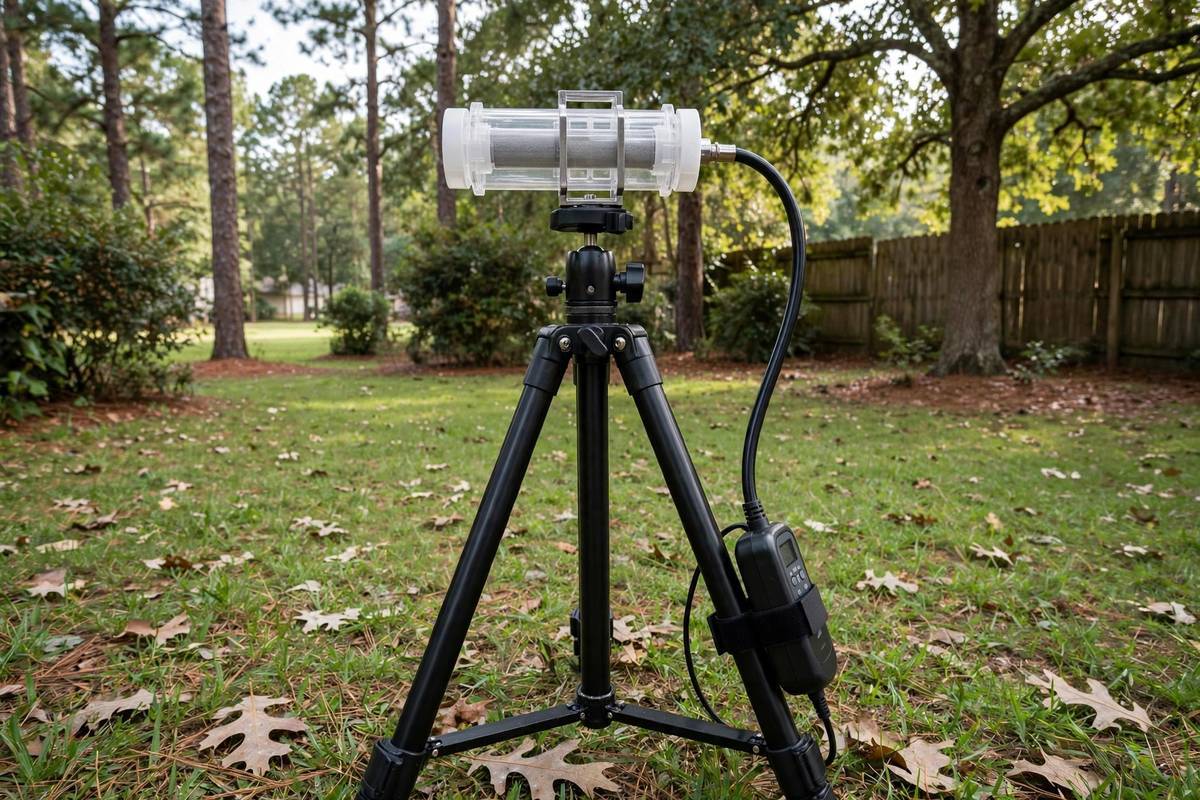
Air sampling is the workhorse of mold testing in Smyrna, GA. Using calibrated air pumps, we draw a measured volume of air through spore trap cassettes — typically 75 to 150 liters over 5–10 minutes per sample. Spores impact onto an adhesive-coated slide inside the cassette, which is sealed, labeled, and shipped to the laboratory.
We always collect an outdoor control sample alongside indoor samples. This is critical in Smyrna because outdoor spore counts here run high year-round — Georgia's long growing season and dense tree canopy produce abundant Cladosporium and other outdoor fungi. An indoor reading only means something when measured against that local baseline. Elevated indoor counts of the same outdoor genera may just be tracking outdoor air; indoor-dominant genera like Aspergillus or Penicillium at levels above the outdoor control signal a genuine indoor source.
Standard placement includes one outdoor control, one or two indoor samples in the complaint area, and often one in the main living space or near the HVAC return for comparison.
Step 3: Surface Sampling
When visible growth or suspicious staining is present, surface sampling identifies exactly what's growing:
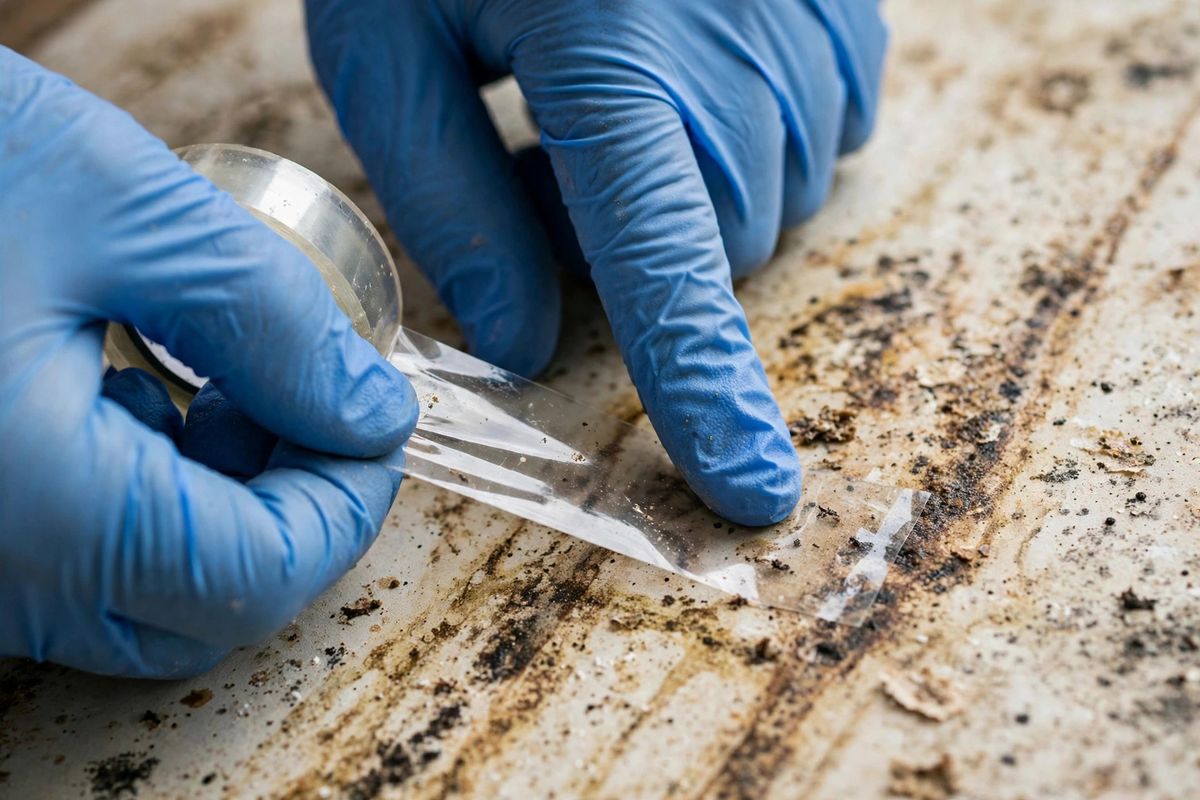
- Tape lift samples — clear adhesive film pressed onto the growth, ideal for flat surfaces like drywall, window frames, and duct interiors. These show the genera present and their relative abundance.
- Swab samples — sterile swabs for textured or irregular surfaces, crevices, and areas where tape won't adhere cleanly.
- Bulk samples — small cut-outs of affected material (a square of water-stained drywall, a section of paper-backed insulation), which let the lab examine growth penetrating into the substrate, not just what's on the surface.

Third-Party Accredited Labs: Why Independence Matters
This is the single most important quality factor in mold testing in Smyrna, GA — and the one most often compromised. The inspector who collects your samples should never be the laboratory that analyzes them.
Smyrna Mold Inspection sends every sample to independent, accredited laboratories — facilities operating under recognized accreditation programs (such as AIHA LAP, LLC accreditation for environmental microbiology). The lab has no relationship with us beyond analysis, no stake in whether results come back clean or contaminated, and no remediation work to sell you on the back of alarming results. That's exactly the point.
Be cautious of any Smyrna mold company offering "in-house lab results in 24 hours." When the same company collects the sample, reads the slide, and then quotes you remediation work, the conflict of interest is structural. Independent lab analysis typically returns results in 2–3 business days (rush options available), and that short wait buys you credibility: a report any other professional — your buyer's inspector, your insurer, your attorney — can rely on without questioning the source.
What a Lab Report Shows (and How to Read It)
Laboratory reports intimidate most homeowners at first glance. Here's what the sections mean:
Spore counts (spores/m³). The total concentration of airborne spores in each sample, expressed per cubic meter of air. This is your headline number — but it means nothing without the outdoor control beside it. A living room at 800 spores/m³ looks concerning until you see the outdoor control at 1,200 spores/m³ on a humid Smyrna afternoon, with the same genera in both.
Genera identification. The lab identifies spores to genus level (and sometimes species). In Smyrna homes, expect to see:
- Cladosporium — the most common outdoor fungus; indoor dominance at high levels suggests an indoor source.
- Aspergillus/Penicillium — reported together as "Asp/Pen" because they're visually similar; elevated indoors relative to outdoors is the classic signature of indoor amplification.
- Stachybotrys — the "black mold" genus; rarely airborne in large numbers because its spores are heavy and sticky. Its presence in air samples, even at low counts, warrants attention and usually points to prolonged saturation on cellulose materials like drywall.
- Chaetomium, Alternaria, Curvularia — water-indicator and outdoor genera that help the inspector read the moisture story.
Indoor/outdoor comparison. The lab or inspector compares profiles, not just totals. Similar genera at similar-or-lower indoor levels: normal ecology. Indoor genera absent outdoors, or indoor counts substantially exceeding the outdoor control: indoor source confirmed.
Limitations of Mold Testing in Smyrna, Georgia
Honest inspectors state the limits upfront, so we will:
- Testing is a snapshot. A spore trap captures 5–10 minutes of air. Conditions change with HVAC cycling, weather, and activity. That's why strategy and the outdoor control matter more than any single number.
- Testing finds mold, not moisture sources. Lab results identify what; the inspection identifies why — the roof flashing failure, the vented crawl space, the Rottenwood Creek seepage. Remediation without fixing the source fails.
- "Toxic mold tests" are a myth. Labs identify genera and counts; they don't test for toxicity in your home. Anyone selling a "toxic mold test" is selling fear. Stachybotrys presence warrants professional assessment — not panic, and not a medical diagnosis from an inspector.
- Surface samples don't represent the whole house. A tape lift tells you what's on that spot. Whole-property conclusions require the full sampling strategy.
How Much Does Mold Testing Cost in Smyrna, GA?
Professional mold testing in the Smyrna area typically falls in the $300–$600 range for a standard residential appointment with air and surface sampling and accredited lab analysis included. Larger homes, multi-zone sampling plans, or rush lab turnaround can run higher. This is not a quote — every property's sampling plan differs based on size, complaint, and moisture history. Smyrna Mold Inspection provides a written estimate before work begins so you know exactly what's included: number of samples, lab fees, and report delivery.
Why Homeowners Across Smyrna Choose Smyrna Mold Inspection
- Independent, accredited third-party labs on every job — no in-house analysis, no conflicts.
- Smyrna-specific strategy — we sample with Cobb County's flood history, red clay moisture dynamics, and local housing stock in mind, not a generic national checklist.
- Inspection-first approach — testing follows a documented moisture assessment, so results arrive with interpretation, not just numbers.
- Clear reporting — lab results explained in plain language with the indoor/outdoor comparison spelled out.
- No remediation upsell — we're an inspection and testing firm. Our findings don't come with a sales pitch attached.
If odors, stains, symptoms, or a transaction have you wondering what's really in your Smyrna home's air, testing gives you the answer — independently verified. Call (770) 542-0091 to schedule mold testing in Smyrna, GA, or email info@moldinspectionsmyrnaga.com. Our office is located at 2001 Lake Park Dr SE, Smyrna, GA 30080.
Mold Testing FAQs — Smyrna, GA
The on-site appointment typically runs 1–2 hours depending on home size and the number of samples. Sealed cassettes ship to the accredited lab the same day, with results usually back in 2–3 business days. Rush analysis is available when a closing deadline or urgent concern requires it.
Yes — an adult should be present to provide access and discuss the moisture history of the property. Your input about past leaks, floods, and odors directly shapes where we sample, so the walkthrough conversation is part of the service.
Keep your HVAC operating normally and avoid unusual activity (like running a whole-house fan or doing heavy cleaning) for several hours before sampling. We want the air sample to represent your home's typical conditions, not a freshly disturbed or ventilated state. We'll give you specific prep guidance when you schedule.
An inspection is the visual and moisture assessment — finding where water has been and where growth is likely. Testing adds laboratory analysis of air and surface samples. In Smyrna, the two work best together: inspection tells us where to test, and testing confirms what the inspection suspects. Testing alone, without the inspection context, often produces confusing results.
No — and be wary of anyone who says it can. Lab reports identify genera and spore concentrations; they cannot diagnose health effects. What testing can do is document whether your indoor air carries an abnormal mold burden compared to Smyrna's outdoor baseline, which is useful information to bring to a medical professional along with your symptoms.
Georgia has no state mold licensing law and no specific statute compelling testing, but lease agreements and real estate contracts commonly include inspection contingencies that cover it. Tenants should review their lease and communicate with landlords in writing; buyers should work through their agent during the due-diligence period.
Related Mold Inspection Services in Smyrna, GA
Black Mold Inspection
Stachybotrys assessment with moisture-source tracing and lab confirmation in Smyrna, GA.
Learn more →Indoor Air Quality Testing
Room-by-room airborne spore counts compared against Smyrna's outdoor baseline.
Learn more →Mold Clearance Testing
Independent post-remediation verification before you pay the final invoice.
Learn more →