
Crawl Space Mold Inspection in Smyrna, GA: The Hidden Reservoir Under Your Home
If there's one place mold owns in Smyrna, GA, it's the crawl space. Ask any experienced inspector in Cobb County where the worst hidden mold problems live, and you'll hear the same answer: under the house. The combination is brutally effective — red Georgia clay that holds moisture against foundations like a sponge, vented crawl spaces that pull humid ~70% outdoor air across cool surfaces all summer, and decades-old floor framing in Smyrna's 1940s–60s brick ranch homes. The result is the city's #1 mold reservoir, sitting directly beneath the rooms your family lives in.
 Independent • Third-Party
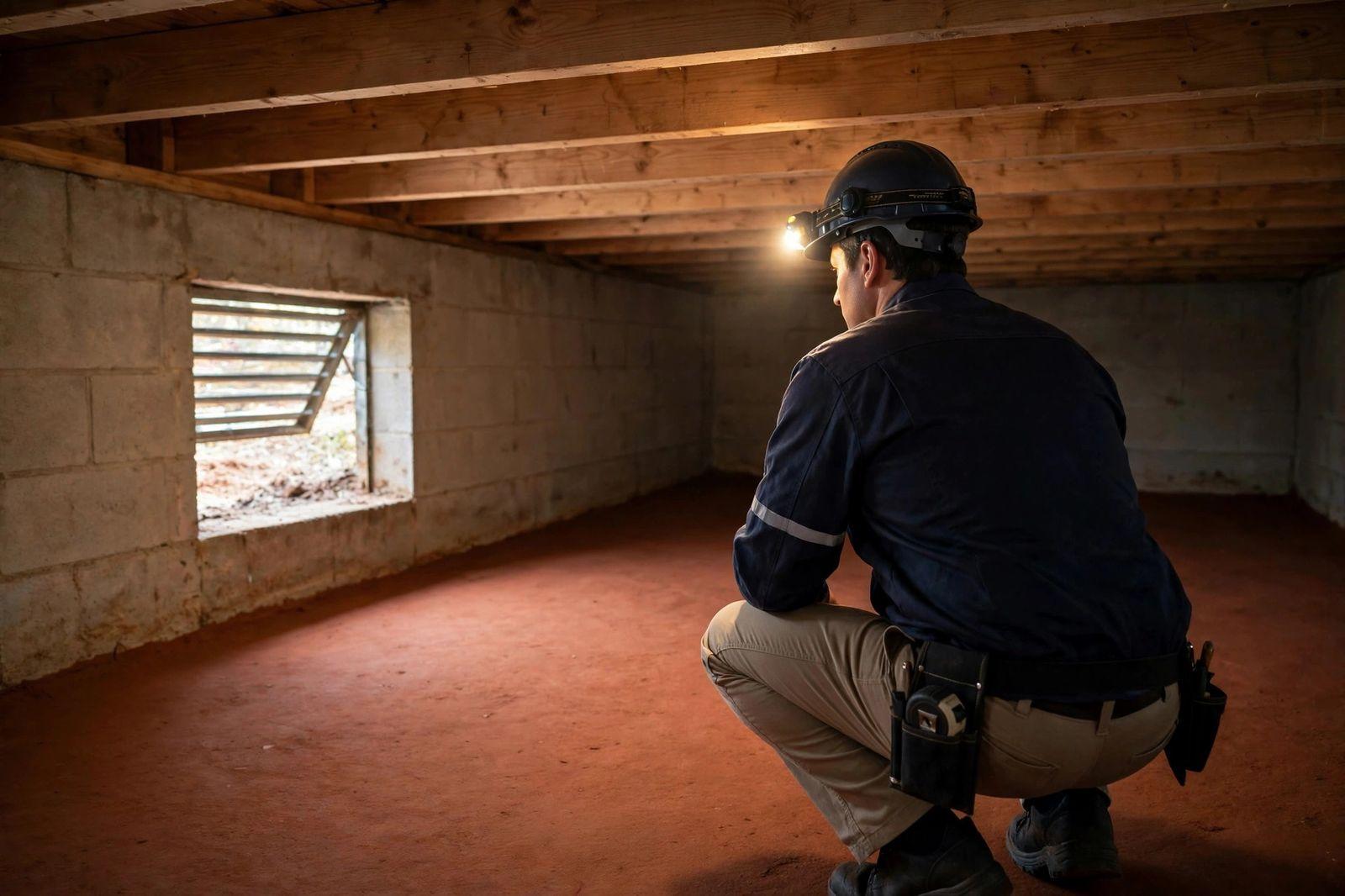
Smyrna Mold Inspection specializes in crawl space mold inspection throughout Smyrna and Cobb County — full under-home assessment with moisture mapping, wood moisture content readings, vapor barrier and drainage evaluation, and accredited third-party lab sampling when growth is found. If your home has a musty odor with no visible source, bouncy or sagging floors, or a crawl space you haven't entered in years, call (770) 542-0091. What we find under there determines the air quality everywhere above it.
Why Smyrna Crawl Spaces Are Mold's Favorite Habitat
Understanding why requires understanding three local forces working together:
Red Georgia clay. Smyrna sits on the famous Georgia red clay — dense, iron-rich soil with terrible drainage. It absorbs water slowly and releases it even more slowly, holding moisture against foundation walls and footings for days after every rain. In low spots near Rottenwood Creek in central Smyrna or Nickajack Creek to the south — both of which have flooded catastrophically, Rottenwood peaking at 11.74 feet in September 2009 and surging again in the September 2026 flash floods — the water table pushes up through the crawl space floor itself.
Vented crawl spaces + humid air. The traditional vented crawl space was designed on the theory that outside air would dry the space out. In Smyrna's humid subtropical climate, that theory fails: the "fresh air" entering through foundation vents carries ~70% relative humidity. When that warm, wet air meets cool surfaces — air conditioning ductwork, copper supply lines, the underside of the subfloor — it condenses. Summer after summer, that condensation keeps wood framing damp enough for mold colonization and, eventually, wood rot.
The stack effect. Warm air rises. As conditioned air escapes through your attic, replacement air gets pulled upward from the lowest available source — your crawl space. Studies consistently show that a significant percentage of the air you breathe on the first floor originated below it, carrying whatever the crawl space air contains: mold spores, MVOCs (those musty odors), and soil gases. A contaminated crawl space isn't a separate problem from your indoor air — it is your indoor air, one floor removed.
What Our Crawl Space Mold Inspection Covers in Smyrna, Georgia
A proper crawl space inspection is a physical, methodical process — not a flashlight wave from the access hatch.
Access and Safety Assessment
We start at the entry: access size and condition, standing water at the entrance, electrical hazards, and evidence of animal intrusion (common in Smyrna crawl spaces and a moisture contributor via waste and nesting material). If conditions are unsafe — deep standing water, exposed wiring in water — we document from the access and advise on remediation of the hazard first.
Moisture Mapping
Using pin and pinless moisture meters, we map moisture across the space: foundation walls, support piers, the ground surface, and the full run of floor framing. Moisture mapping reveals patterns — a wet band along one foundation wall points to exterior grading or gutter failure on that side; uniformly damp framing points to ventilation-driven condensation; isolated wet spots trace to plumbing leaks above. The pattern is the diagnosis.
Wood Moisture Content Readings
This is the structural heart of the inspection. We take wood moisture content (WMC) readings on floor joists, band boards, sill plates, and subflooring throughout the crawl space. The thresholds matter:
- Below ~16% WMC — normal, dry wood. No active concern.
- ~16–20% WMC — elevated; conditions favor mold growth on wood surfaces. Investigate the source.
- Above ~20% WMC — active risk zone for wood-decay fungi (rot), not just surface mold. Structural implications begin here.
- Above ~28% WMC — fiber saturation; decay fungi thrive. This is a structural repair conversation, not just a mold conversation.
We document readings spatially so you — and any contractor you hire — can see exactly which framing members are affected and how far the problem extends.
Mold vs. Wood Rot: Knowing the Difference
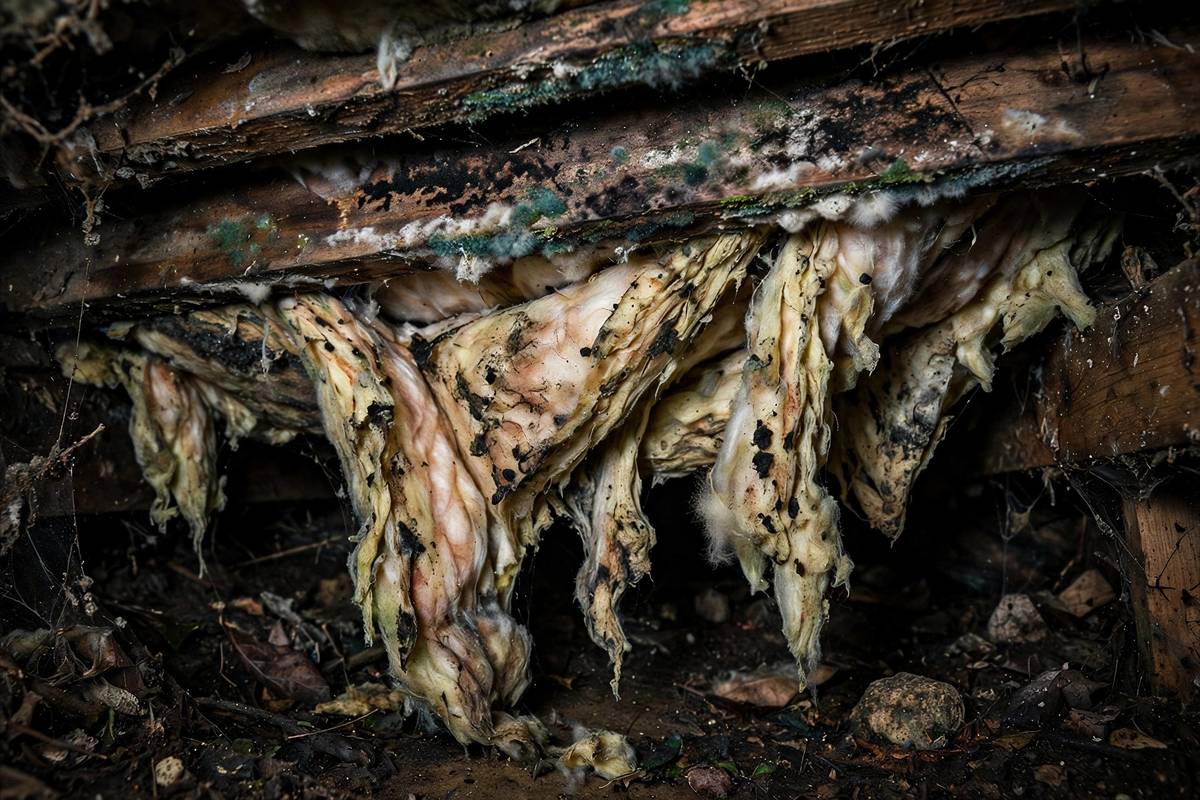
Homeowners conflate these; professionals must distinguish them. Surface mold on framing — the fuzzy, discolored growth in white, green, black, or orange — feeds on surface organic matter and generally doesn't compromise structural strength, though it heavily contaminates the air. Wood rot (wood-decay fungi) digests the wood's structural fibers themselves: brown rot leaves cubical cracking and crumbling, white rot leaves a spongy, bleached texture. A screwdriver probe test — sound wood resists, rotted wood yields — separates cosmetic from structural on the spot.
Both get documented. Mold drives the air quality and remediation scope; rot drives the structural repair scope. Many Smyrna crawl spaces have both, in different zones, from the same moisture source.
Vapor Barrier Evaluation
We assess the ground vapor barrier — if one exists. Many older Smyrna homes have partial, degraded, or entirely absent poly sheeting: thin 6-mil plastic torn by past work, pulled back from walls, or buried under silt from flood events. An effective barrier is continuous, sealed at seams and piers, and extended up foundation walls. We document coverage percentage, condition, and whether groundwater sits on top of the barrier (a drainage failure, not a barrier failure).
Drainage and Grading Analysis
Water in a crawl space comes from somewhere, and we trace it: exterior grading (soil should slope away from the foundation), gutter downspout discharge points (a downspout dumping at the foundation corner explains a lot of Smyrna crawl space flooding), and evidence of bulk water entry versus condensation versus plumbing leaks. Interior French drains or sump pumps, where present, get evaluated for function — a sump pit full of stagnant water with a dead pump is worse than no system at all because it implies protection that isn't working.
Ductwork and Plumbing
Crawl spaces concentrate a home's infrastructure. We inspect duct insulation for condensation damage and microbial growth, supply and drain lines for active leaks (a slow pinhole leak can saturate framing for months unnoticed), and dryer vent terminations — a dryer venting into the crawl space instead of outdoors pumps gallons of moisture under the house with every load.
Sampling
Where visible growth is found, tape lift or swab samples go to our accredited third-party lab for genus identification — critical for distinguishing, say, Cladosporium surface growth from Stachybotrys on chronically saturated subfloor. See our mold testing page for full sampling methodology.
Common Crawl Space Findings in Smyrna, GA Homes
After hundreds of under-home inspections across Cobb County, patterns repeat:
- Condensation-driven mold on ductwork and joists — the classic vented-crawl-space signature, worst on north-facing runs and where ducts contact framing.
- Standing water after rain events — grading failures and downspout issues, amplified in floodplain-adjacent neighborhoods near Rottenwood and Nickajack Creeks.
- Plumbing leaks discovered by accident — the inspection finds what the water bill hinted at.
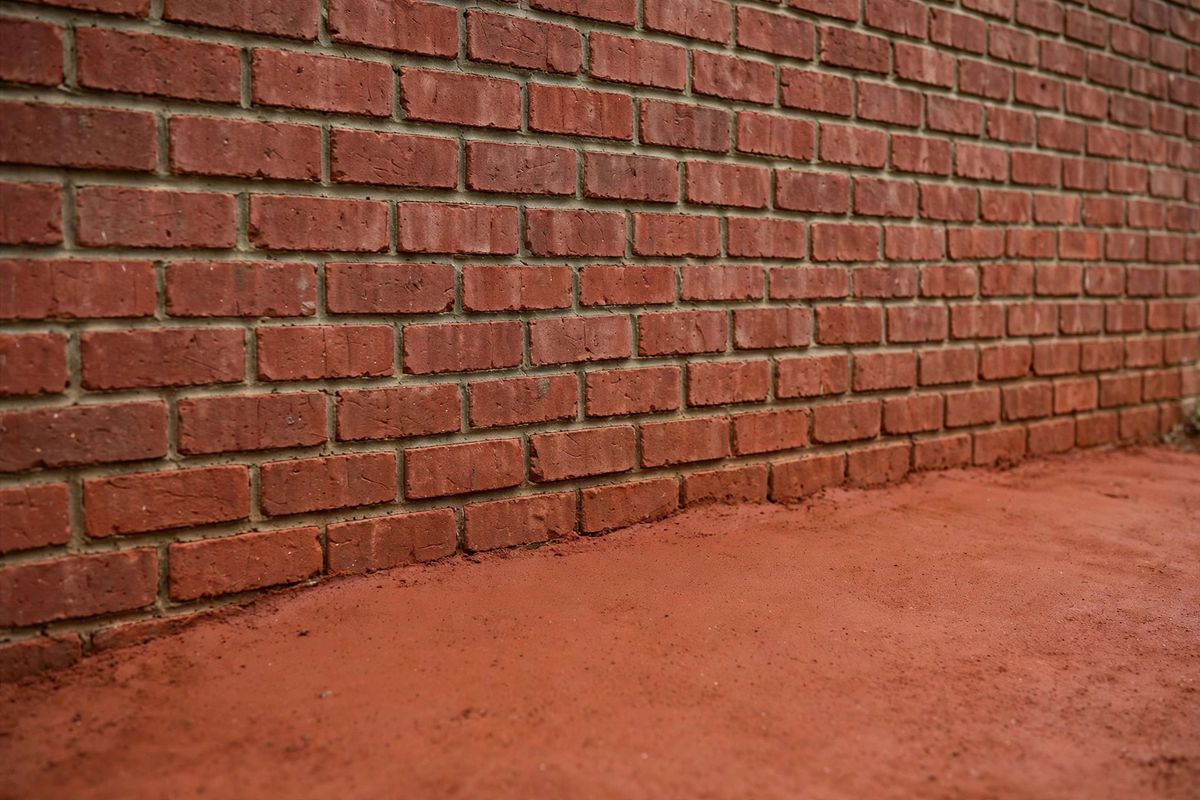
- Missing or failed vapor barriers — bare red clay exhaling moisture directly into the space.
- Sump and drainage systems installed but non-functional — the 2009 or 2026 flood motivated installation; maintenance didn't follow.
- Animal intrusion — displaced vent screens, with contamination beyond just mold.
Encapsulation vs. Ventilation: What the Inspection Determines
Smyrna homeowners inevitably ask about crawl space encapsulation — sealing vents, installing heavy-duty vapor barriers, adding dehumidification. It's often the right answer in this climate, but it's not automatically the right answer, and the inspection determines which:
- Encapsulation candidates: chronic condensation, high wood moisture content across zones, bulk water managed by working drainage. Sealing the space from humid outdoor air and dehumidifying breaks the cycle.
- Fix-first candidates: active bulk water entry, failed grading, dead sump pumps. Encapsulating over an unresolved water intrusion problem seals the water in. Drainage and source correction come first; encapsulation second.
- Targeted-repair candidates: isolated plumbing leak with otherwise dry conditions. Fix the leak, remediate the affected framing, monitor — full encapsulation may be unnecessary.
Our report gives you the sequence, not just a product recommendation — because the order of operations determines whether the money works.
Crawl Space Mold Inspection Cost in Smyrna, GA
A thorough crawl space mold inspection with moisture mapping and lab sampling in the Smyrna area typically falls in the $300–$600 range for a standard residential assessment. This is not a quote. Tight clearances, extensive growth requiring multiple samples, or combined crawl-space-plus-interior scopes adjust the work involved. Smyrna Mold Inspection provides a written estimate before work begins, itemizing the inspection, each sample, and lab fees.
Why Smyrna Homeowners Trust Our Under-Home Assessments
- IICRC-certified inspectors — in a state with no mold license requirement, certification is your quality filter. We carry it.
- Moisture science, not scare tactics — wood moisture content readings and mapped data, not vague warnings.
- Accredited third-party labs for every sample — independence you can hand to a contractor, insurer, or buyer.
- Source-first reporting — we tell you why it's wet, in what order to fix it, and what can wait.
- No remediation sales — we inspect and test. The repair quotes come from contractors you choose, scoped from our independent report.
The air your family breathes starts under your floors. If your Smyrna home has a crawl space — especially a vented one over red Georgia clay — an inspection is the highest-value mold assessment you can get. Call (770) 542-0091, email info@moldinspectionsmyrnaga.com, or visit us at 2001 Lake Park Dr SE, Smyrna, GA 30080.
Crawl Space Mold Inspection FAQs — Smyrna, GA
Given the climate and clay soils, every 1–2 years is prudent — and immediately after any flooding, plumbing leak, or the discovery of musty odors indoors. Homes near Rottenwood or Nickajack Creeks should lean toward annual checks, especially after major rain events like the September 2026 flash floods.
You can look, but a professional inspection brings calibrated moisture meters, knowledge of wood moisture thresholds, and the ability to distinguish mold from rot — plus lab sampling when it matters. DIY checks also miss the pattern recognition: knowing that a wet band on the east wall means a gutter problem, not a groundwater problem. If you do go under, wear a respirator, watch for wiring and animals, and never enter a space with standing water near electrical components.
Encapsulation controls the moisture that mold needs — but existing growth on framing should be remediated first, and bulk water entry must be solved before sealing. Encapsulating over active mold or unresolved drainage traps the problem inside. The correct sequence is: fix water entry, remediate growth, then encapsulate and dehumidify.
We can't answer that medically — consult a medical professional about health concerns. What we can document is the extent of growth, the genera present via lab analysis, and the stack-effect pathway connecting your crawl space air to your living space. That environmental evidence is what clinicians and remediation contractors both need.
General home inspectors note visible conditions and access limitations, but they don't take wood moisture content readings across framing zones, don't sample growth for lab identification, and don't map moisture patterns to diagnose sources. If your home inspection flagged crawl space moisture or staining, a dedicated mold inspection is the appropriate follow-up — especially before closing.
No — we work around stored items, though clearing the access opening helps. Just make sure the access hatch or door is unlocked and accessible, keep pets secured, and let us know about any known hazards (past flooding, electrical work, animal activity) when you schedule.
Related Mold Inspection Services in Smyrna, GA
Basement Mold Inspection
Below-grade moisture mapping for daylight basements and lower levels.
Learn more →HVAC Mold Inspection
Ductwork and air handler inspection for crawl space–routed systems.
Learn more →