
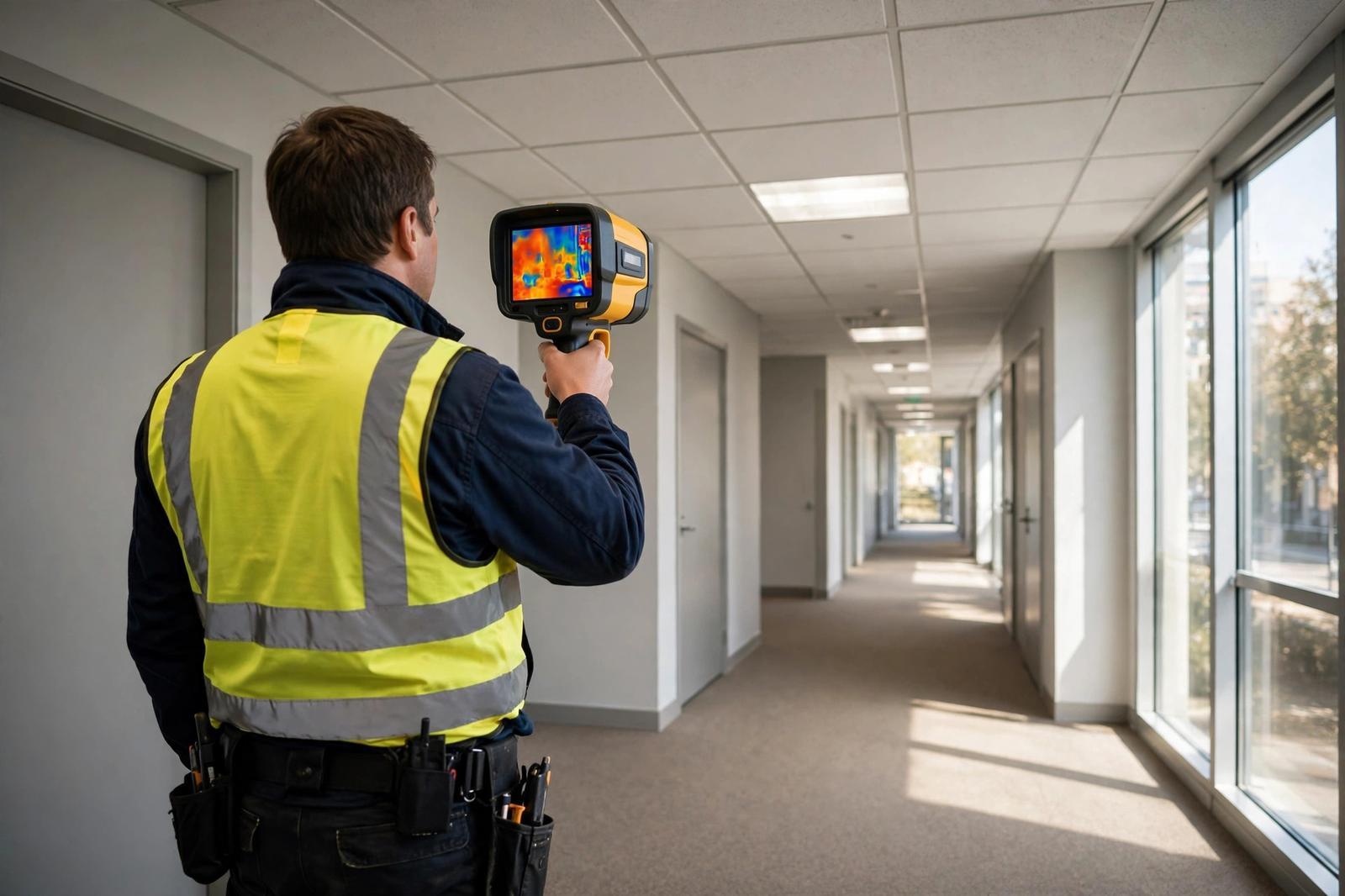
When a tenant calls about a musty smell on the second floor, when a teacher reports recurring headaches in a classroom wing, or when a restaurant health inspector flags visible growth behind a dish station — you need a commercial mold inspection in Smyrna, GA that documents what's really going on and gives you a defensible path forward. Smyrna Mold Inspection serves commercial properties throughout Smyrna and Cobb County, from the offices and medical buildings along the Cumberland corridor to the retail and restaurant spaces on Atlanta Road. Call (770) 542-0091 to schedule an inspection during off-hours, so your business keeps running while we do the work.
Commercial buildings in Smyrna, GA face mold pressures that homes simply don't. A 2009-era office on Atlanta Road can have a 30-ton rooftop HVAC unit (RTU) feeding condensation into a low-slope roof section where water ponds for days after one of Cobb County's heavy summer downpours. A school cafeteria near Rottenwood Creek sits a few feet above a floodplain that has overflowed repeatedly — including the September 2009 event when Rottenwood Creek peaked at 11.74 feet. Restaurant spaces, nail salons, and laundromats along the Cumberland corridor generate constant interior moisture from cooking, washing, and customer traffic, all of which loads already-taxed HVAC systems. A commercial mold inspection in Smyrna, GA has to account for all of this: larger buildings, more complex ventilation, more people affected, and far more documentation riding on the result.
Why Commercial Mold Inspection in Smyrna, GA Is Different From Residential Work
Larger HVAC Systems, Larger Problems
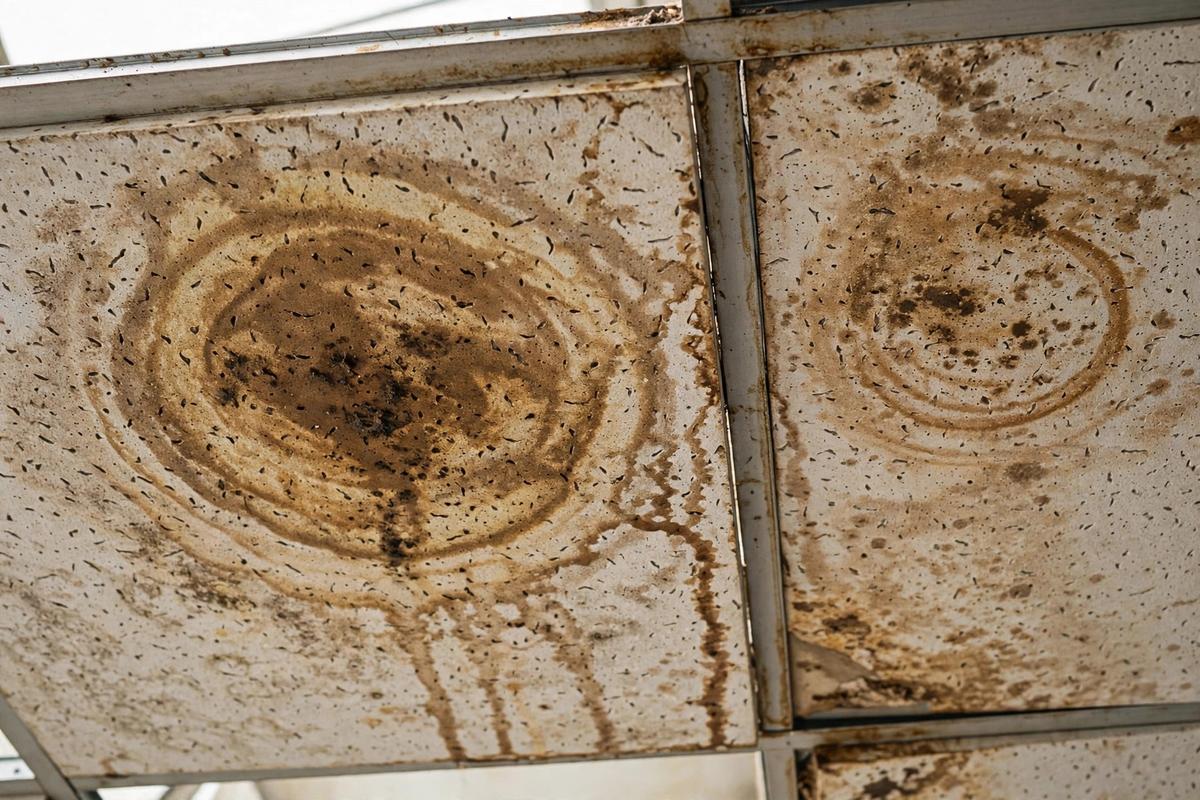
The #1 driver of commercial mold issues in Smyrna, GA is the HVAC system. Residential inspectors deal with a single air handler and duct runs. Your building may have multiple rooftop package units, economizers pulling in 70%-plus humid Georgia air, and ductwork snaking through drop ceilings across 20,000 square feet. When a condensate drain pan on an RTU cracks or overflows — a common failure on aging units serving 1980s-vintage Cumberland-area office stock — water saturates the roof decking above and drips into ceiling tiles below. Ceiling tiles hide the problem beautifully: by the time a brown stain appears, the decking above may have hosted Aspergillus and Penicillium growth for months. A commercial mold inspection in Smyrna, GA always includes a careful look at every accessible HVAC unit, drain pans, condensate lines, and the plenum and duct interiors where microbial growth spreads spores throughout the occupied space.
Flat and Low-Slope Roof Ponding
Much of Smyrna's commercial building stock — the retail strips along Atlanta Road, the office parks off the Cumberland corridor, light industrial space toward the south end near Nickajack Creek — was built with flat or low-slope roofs. In Cobb County's humid subtropical climate, which delivers roughly 50 inches of rain a year with no true dry season, poor drainage turns into ponding water. Ponding water eventually finds the weak seam, the failed flashing, the overloaded scupper — and then it's inside, soaking the roof deck, the insulation, and everything below. Commercial inspectors trace water paths from the roof down through the building envelope, because where the water goes, the mold follows. For a deeper look at what's happening in your indoor air while you wait, our indoor air quality testing service quantifies airborne spore loads room by room.
Tenant Complaints, School and Healthcare Standards, and Liability
In a commercial setting, a mold complaint is never just a maintenance ticket. An office tenant's complaint letter, a parent's email to a Smyrna school principal, a healthcare facility's infection-control review — each one creates a paper trail that demands a professional, independent response. Property managers in the Cumberland corridor, where Class B office and mixed-use space turns over frequently, know that a documented, third-party commercial mold inspection in Smyrna, GA is the difference between a complaint that fades and a dispute that escalates. Schools and healthcare facilities face additional scrutiny: children and immunocompromised patients are the most sensitive populations, and administrators need real data — spore counts, species identification, moisture readings — not opinions. Our inspections produce exactly that: photographs, moisture mapping, lab results from an accredited laboratory, and a written report you can hand to a tenant, an insurer, a school board, or legal counsel with confidence.
What a Commercial Mold Inspection in Smyrna, GA Covers
1. Building History and Complaint Mapping
We start with the paper trail: when did the odors start, which suites or classrooms are affected, where has water intruded before (the 2009 Rottenwood Creek flood touched many central-Smyrna commercial parcels, and September 2026 flash flooding affected properties countywide). We map every complaint location on the building plan, because mold complaints cluster around sources — and a cluster tells us where to look first.
2. Roof, Envelope, and Drainage Walkthrough
Flat and low-slope roofs get a ponding survey: where does water sit 48 hours after rain? We check scuppers, internal drains, flashing at parapets, and the seals around every rooftop penetration. On the ground we check grading — Smyrna's red Georgia clay holds water against foundations rather than draining through it — plus downspout discharge and loading-dock slab joints where water enters and wicks upward.
3. Full HVAC and Ventilation Assessment
Every accessible RTU, air handler, condensate pan, and drain line is inspected for standing water, biofilm, and rust-through. We measure humidity at supply and return grilles across zones; a supply duct running at 65%+ relative humidity in July is growing mold on the duct liner right now. In kitchens and high-moisture occupancies we check makeup-air balance, because a negatively pressurized restaurant on Atlanta Road pulls humid outdoor air (and cooking grease) through every crack in the envelope.
4. Interior Moisture Mapping and Sampling
Thermal imaging and pin/probe moisture meters sweep walls, ceilings, and slab floors — especially the first-floor suites of buildings near Rottenwood and Nickajack creeks, where capillary moisture from the water table keeps slab edges damp year-round. Where we find active growth or elevated readings, we collect air samples (spore traps) and surface samples (tape lifts or swabs) for accredited lab analysis: species and concentration, the data your insurer and your tenants' counsel both respect.
5. Defensible Written Report
Commercial clients don't get a verbal "looks okay." You get a bound-style digital report: findings by location, annotated photographs, moisture maps, lab results, and prioritized recommendations — remediation scope guidance, HVAC corrective actions, and building-envelope fixes. Property managers use it to justify capital spending to ownership; school administrators attach it to board minutes; insurers accept it as the documented basis of a claim.
Minimizing Business Disruption: Off-Hours and Phased Inspections for Smyrna, GA Properties
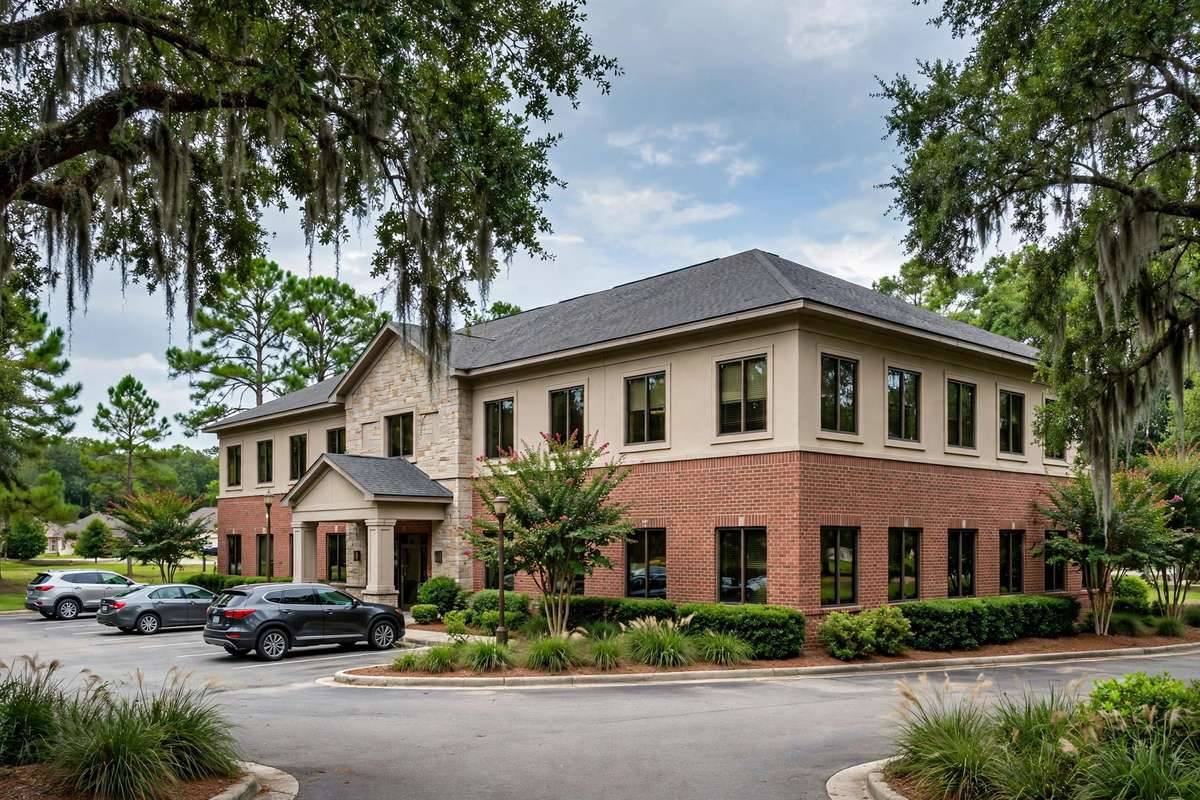
Nobody wants an inspector walking through a dental office during patient hours or opening ceiling tiles above a busy restaurant dining room. That's why our commercial mold inspection in Smyrna, GA is scheduled around your operation: evenings, weekends, and early mornings are standard. For larger properties — multi-tenant retail on Atlanta Road, multi-floor office buildings on the Cumberland corridor — we phase the work: one wing or floor at a time, with tenants notified in advance and sensitive areas (server rooms, surgical suites, food-prep lines) handled under your staff's supervision. Air sampling pumps run quietly and don't interrupt work; we schedule the noisiest work (ceiling-tile removal for plenum inspection) when the space is empty. The goal is a complete inspection with zero downtime for your business.
Documentation That Property Managers and Insurers Actually Use
If you've managed commercial property in Cobb County for any length of time, you know the sequence: complaint, inspection, remediation, and then the fight over who pays. Insurers scrutinize commercial mold claims aggressively, and Georgia's humid climate gives them cover to call growth "long-term maintenance neglect" unless you have dated evidence to the contrary. A professional inspection report establishes the baseline: what was found, where, when, and how bad — with lab-confirmed species and concentrations. When remediation is complete, mold clearance testing provides the matching bookend: independent verification that the space is back to normal fungal ecology before tenants return or the space re-leases. That before-and-after documentation package is exactly what risk managers and carriers want to see, and it's the strongest negotiating position a property manager can hold.
Smyrna, GA Commercial Spaces We Inspect Most Often
- Office buildings (Cumberland corridor & Atlanta Road): RTU condensate failures, flat-roof ponding, tenant improvement water damage hidden above drop ceilings.
- Retail and restaurants (Atlanta Road, South Cobb corridors): kitchen and dish-area moisture, grease-laden HVAC, slab-edge wicking in slab-on-grade construction.
- Schools and daycare facilities: classroom-wing humidity complaints, cafeteria and locker-room moisture, aging unit ventilators in 1960s–70s buildings.
- Healthcare and medical offices: infection-control documentation needs, waiting-room and exam-room air quality concerns, strict scheduling around patient hours.
- Apartments and condos (Cumberland area complexes): common-area leaks, turnover-unit inspections between tenants, HOA board documentation for reserve planning.
- Churches, warehouses, and light industrial: intermittent occupancy (mold grows happily in an unconditioned fellowship hall all summer), roof-deck leaks over stored inventory.
What a Commercial Mold Inspection in Smyrna, GA Costs — Broad Ranges, Not a Quote
Commercial pricing depends on building size, number of HVAC units, floors, and sample count, so treat everything here as a broad range, not a quote — request a written estimate before work begins, because your building's scope is unique. Small commercial spaces (a single retail suite or small office under ~2,000 sq ft) generally fall in the same range as a large residential inspection. Mid-size offices, restaurants, and multi-suite buildings with several rooftop units typically run higher as inspection time and sample counts scale. Large multi-floor buildings, schools, and healthcare facilities are scoped individually — we walk the property and give you a written estimate before work begins. Every commercial engagement includes the written report and lab fees itemized in advance. Call (770) 542-0091 and describe your building; we'll tell you honestly what tier it falls in and send the written estimate before scheduling.
Please note: All prices on this page are broad ranges only — not a quote. Request a written estimate before work begins; the written estimate is confirmed in writing before any work starts.
Frequently Asked Questions: Commercial Mold Inspection in Smyrna, GA
A single retail suite or small office usually takes two to four hours on site. A mid-size office building or restaurant with multiple HVAC units runs a half day. Large multi-floor buildings, schools, and healthcare campuses can take a full day or be phased across two visits. Lab results follow in two to three business days, and the written report is delivered after results are in. We schedule off-hours — evenings and weekends — so the inspection doesn't interrupt your business.
Yes. RTUs, condensate pans, drain lines, and flat/low-slope roof drainage are core parts of every commercial mold inspection in Smyrna, GA. Roof access must be available (we'll coordinate with your building engineer or roofer), and RTUs should be accessible — if a unit is locked out, note it in advance so we can arrange access and avoid a return trip.
That's the standard, not the exception. We work evenings, weekends, and early mornings; we phase multi-tenant buildings floor by floor or suite by suite; and we coordinate with your property manager on tenant notifications. Sampling pumps are quiet, and intrusive work like ceiling-tile removal is scheduled when spaces are unoccupied.
Our reports include dated photographs, moisture mapping, accredited lab results with species identification, and prioritized recommendations — the documentation insurers and attorneys expect. It is an independent, third-party assessment, which is exactly what carries weight in a dispute. For post-remediation sign-off, pair it with mold clearance testing for a complete before-and-after file.
You're right: Georgia requires no state mold license. Vet any inspector on certifications instead — IICRC (Institute of Inspection, Cleaning and Restoration Certification) credentials are the industry standard — plus proof of commercial experience, sample lab accreditation, and a sample report. Ask any company you're considering for all three before you hire them. Our inspectors carry IICRC certification and our samples go to an accredited independent laboratory.
In Cobb County's humid subtropical climate, an annual inspection is prudent for most commercial buildings — ideally in late spring, before the heaviest humidity and storm season. Buildings with prior water intrusion, flat roofs with known ponding, or sensitive occupancies (schools, healthcare, daycare) benefit from twice-yearly checks. Any tenant complaint about odors, visible growth, or health symptoms should trigger an inspection immediately, not at the next scheduled interval.
Smyrna Mold Inspection serves commercial properties throughout Smyrna, GA 30080 and 30082 and greater Cobb County. Call (770) 542-0091 or email info@moldinspectionsmyrnaga.com to schedule an off-hours inspection. 2001 Lake Park Dr SE, Smyrna, GA 30080